Nepal 2012 – The Home Dedication Ceremony

HFH (Day 10) – Friday, February 24, 2012

Our last day in Bharatpur and a day focused on the house dedication.  The social ambience of the team was a mix of sadness, excitement, and happiness.  For me, the sadness was about the time coming to an end with this team, happiness for the family and their changed life as they move forward, and excitement for the adventures that lay ahead of me.

Our team left for the build site in the morning as per usual.  My expectation was that we would arrive at the build site, do a simple dedication, give our thanks and well wishes to the family and those from community, and depart for the airport.

When we arrived at the site, I was astounded and so touched.  I could not believe the number of people who came out for the dedication.  There was a formal banner announcing the dedication, tons of women from the Amardeep Women’s Cooperative (distinguished by their beautiful blue saris) and dignitaries were in attendance, and there were seats for the guests of honor – which were seats for our team.   Guests of Honor?  Us?  I was so touched.  There were speeches and words of thanks from the various partners, our leader Sherwood, the mayor, and members of the homeowner’s family.  And there were gifts from the Neupane family.  This was totally unexpected, especially since they are so poor.  All of us received tikas.  Women on our team received small traditional Nepalese purses, hair bows and bracelets, and the men from our team looked so grand in their new Nepalese hats. I hope that Richard wears his proudly as he walks the street of Chicago  ;).  So dapper, like the Nepalese men!   From HFH Nepal, there were certificates and a lovely photo of our team.  One could not help but have tears in one’s eyes.  For me, what a significant moment in the family’s life!  They now have a safe, dry, and comfortable house in which to build memories.  The process of cutting the ribbon to the entry of the house took place and photos abounded.  The family looked so happy and the grandmother signalling her thanks with the traditional “Namaste” motion.  It is a memory etched in my consciousness.  While I am writing this (as I catch up on my blog entries) 5.5 months (August 13/12)later, I still have the same emotional reaction of feeling choked up.  I don’t want to lose the memory of this special day.  My emotions of this moment 5.5 months  later testify to the depth of the experience.

Once the formalities were finished, the music and dancing began.  Members of the Women’s Collective and the family cleared the chairs and brought us to our feet to dance.  Drums and singing songs of happiness and gratitude.  It was truly beautiful.

It was time to say good bye.  A difficult time for me as how does one really know how life will turn out.  My optimistic spirit wishes all the best to the family.  Nepal is a very poor country; its’ people rich in character, kindness, and gratitude.  These qualities will surely allow the human spirit to soar, the family to have a better life.  As we walked away from the site, members of the women’s cooperative, the family, community members and children formed two lines leading to our bus to wish us good bye.  That was not an easy walk for me and for those of you who know me, it was done with tears in my eyes.  The refrain of the women to me was “Don’t cry, be happy”.  I was touched and I was happy.   Happy for this opportunity, for all of the lessons of the build and for those lessons to be revealed at a later time, grateful for all those who I met and who will remain with me as a part of this grand adventure.

Namaste….

I hope that my pictures have captured the beauty of the people and  the emotions of the moment.

This slideshow requires JavaScript.

Nepal 2012 – Building Away!

This slideshow requires JavaScript.

HFH (Days 8 & 9) – Wednesday, February 22 & Thursday, February 23, 2012

The days here have been flying by and I am finding it hard to believe that the end of the build is nearing.  Our team has been so amazing!   I have so much gratitude for the positive spirits and attitudes.  It has been great to work with my team members and to have the opportunity to get to know them.  This Habitat for Humanity Nepal build has been so different from the one in Cambodia.  I don’t say this as a critique at all as there were so many awesome things about the HFH Cambodia build.  Here in Nepal,  we are a team of only 16 people who spend approximately 16 hours of the day together.  In total, our team is a bit larger (22) when you include Sujit (our local HFH affiliate contact), Manbdr (the AWC contact) the tradesmen, and our bus driver.  Again, a contrast to the Cambodia build where there were 300+ people from all over the world building 22 houses in 5 days.  In Nepal, we have a routine of working, eating lunch, working some more, showering, eating dinner, drinking, and sleeping.  Days pass quickly and we repeat the routine.  Our team has been discouraged from leaving the hotel in the evening.  I suspect that safety might be an issue.  When we have left the hotel in the evening, it has been to search out pharmaceuticals (all legal I assure you), or money from a nearby ATM.  When we go out after dark for such reasons, we do so in pairs. On the rare occasion when I have left the hotel, the evening life around the market and shops is fascinating, the smells gamey.  There are smells I have never experienced and I am not sure how eager I am to experience them again.  It is not unusual to see whole pigs, heads of animals with hair lying about on tables to be sold.  In search of the pharmacy, I found a room no bigger than the size of a large bathroom and dealing in all kinds of medication.   No prescriptions needed, no questions asked.  Viagra anyone?

Even though we are stationed in a city of over 100,000 inhabitants, there is not much to do here in the evening.  Bharatpur seems to be a poor city with few visible restaurants, theaters, bars, and tourist sites.  These were all things that our HFH Cambodia team had access to in Phnom Pehn.   My sense is that our Nepal team has been okay with sticking around the hotel.  Personally, I did not have any issue with this.   I was grateful for the lack of outside distraction.   The lack of distractions provided opportunities to bond and really forge together as a team. I would do this kind of small scale build all over again.

With respect to our work days, our focus has been tasks related to the plastering of walls. Yesterday we started the process of plastering the inner walls and mapped out the patio.  Day 8 was focused on completing the plastering of the inner walls and the patio, while Day 9 involved the initiation and completion of  the plastering of the outside walls.

We did have a lovely experience of team building with the local community.  During the build, we had to use a lot of water in making our mortar.  At the onset of the build, we had two large oil drums that were filled to their brims with water.  On Day 8, the two barrels were almost empty.  Our dilemma was how to fill the barrels back up with water.  There was no running water in the community or on the build site and the nearest community well was about 750 meters away.  Filling our limited number of buckets and taking them back and forth from the well would have taken a tremendous amount of time to fill the barrels.  We decided to do it the old fashioned way which was to create a line of people from the well to the barrels.  It was kind of like what they did in the old days when there was a fire and no hoses to put the fire out.  I am not sure how many people we had, but our team and community members came together to get the job done.  We had one person start at the well with two buckets of water.  They started the process of walking 25-30 feet to pass the buckets to the next person.  Again, another moment of pride in getting the job done quickly and seamlessly.

As we move forward with each day of work, our physical strength and stamina increase, despite many of us having the typical travel ailments (e.g. forms of Delhi Belly).  Thank goodness for Cipro!  After a week of work, I have noticed that all of us are now able to carry the 50-60 pound bags of sand single-handed.  At the beginning of the build, we had to carry these suckers in pairs.  While I never did master carrying the heavier bags of cement on my own, others got to the point where it was not a problem.  I will leave the build with lean and mean biceps!

Nepal 2012 – Chitwan National Park

This slideshow requires JavaScript.

 Saturday, February 18 & Sunday, February 19, 2012

Our Habitat for Humanity team successfully finished our first week building the house.  We left it with the walls completely constructed and with all door and window frames in place.  Over the weekend, our trades people would be installing the tin roof.  I felt that the team left the project on Friday feeling a sense of pride and connection to each other, the family, project and surrounding community.  It was not time for some R&R on the weekend.    As a team, we all decided to use our free weekend to travel to Chitwan National Park.  Bharatapur, the city in which we were stationed, sits close to the border of CNP.  CNP is located in the south lowlands (the Terai) of Nepal and is pretty close to the border of India.

Our team travelled to Chitwan where we stayed in a lodge within the confines of the Park.  Chitwan, Nepal’s first national park, was established in 1973.  Prior to its establishment, it was hunting grounds of Nepal’s ruling class.  It’s seen a lot of damage.  One of the stats I read was that at the end of the 1960’s 70% of its  jungles were eradicated through the use of DDT.  As one can imagine, it was totally destructive to the habitat of many animals who live in that area. CNP is the home of  the Bengal tiger (it has one of its best habitats in the world)  and the one-horned rhino.  At the end of the 1960’s, only 95 rhinos remained. Continue reading

Luang Prabang in Living Colour

This slideshow requires JavaScript.

What can I say?  I LOVE Laos!  It feels so sedate and safe here.  The people are so gentle.  It has offered a perfect reprieve after the chaos and stress of Vietnam.  Motorbikes – don’t see many, don’t want to see any!  I had my fill of them in Vietnam.  Laos has opened up her arms and embraced me.  It is beautiful, the people are kind, and the streets are sedate.  It’s not for everyone, but it has been an antidote for me.  I haven’t left yet, but I am longing to return.

Lovely Luang Prabang, Laos

December 16-23, 2011

Laos is a lovely landlocked country that is bordered by Myanmar, China, Thailand, Cambodia, and Thailand.

Laos was another country on my agenda but by the time I got there I was feeling quite emotionally and physically tired from Vietnam. My original intentions were to travel through the country over 7-10 days, but when I arrived in LP, I wanted to stay put.

I was in LP from December 16-23. I arrived by air on the 16th at around 10 pm. Going through immigration for my tourist visa posed some challenges. I had to pay cash for the visa, either in US dollars or Thai baht, neither of which i had. Nor did they take Visa. It was poor planning on my part. Immigration made me surrender my passport so that I could seek out money in the airport. The sole ATM was broken and the money exchange shop was closed. Immigration kept my passport and the gentleman at the office gave me his phone number and told me to phone when I had the cash. He told me that he would deliver my passport when he got my call.

It was 10:15 pm and as I left the airport, I felt unsettled and stressed about being without my passport. Anyone who is well-travelled knows that surrendering your passport is a big no-no. I envisioned difficulties at my guesthouse as one must show his/her passport upon arrival. My only option was to roll with it.

Sandra, the angel who saved my ass in Immigration

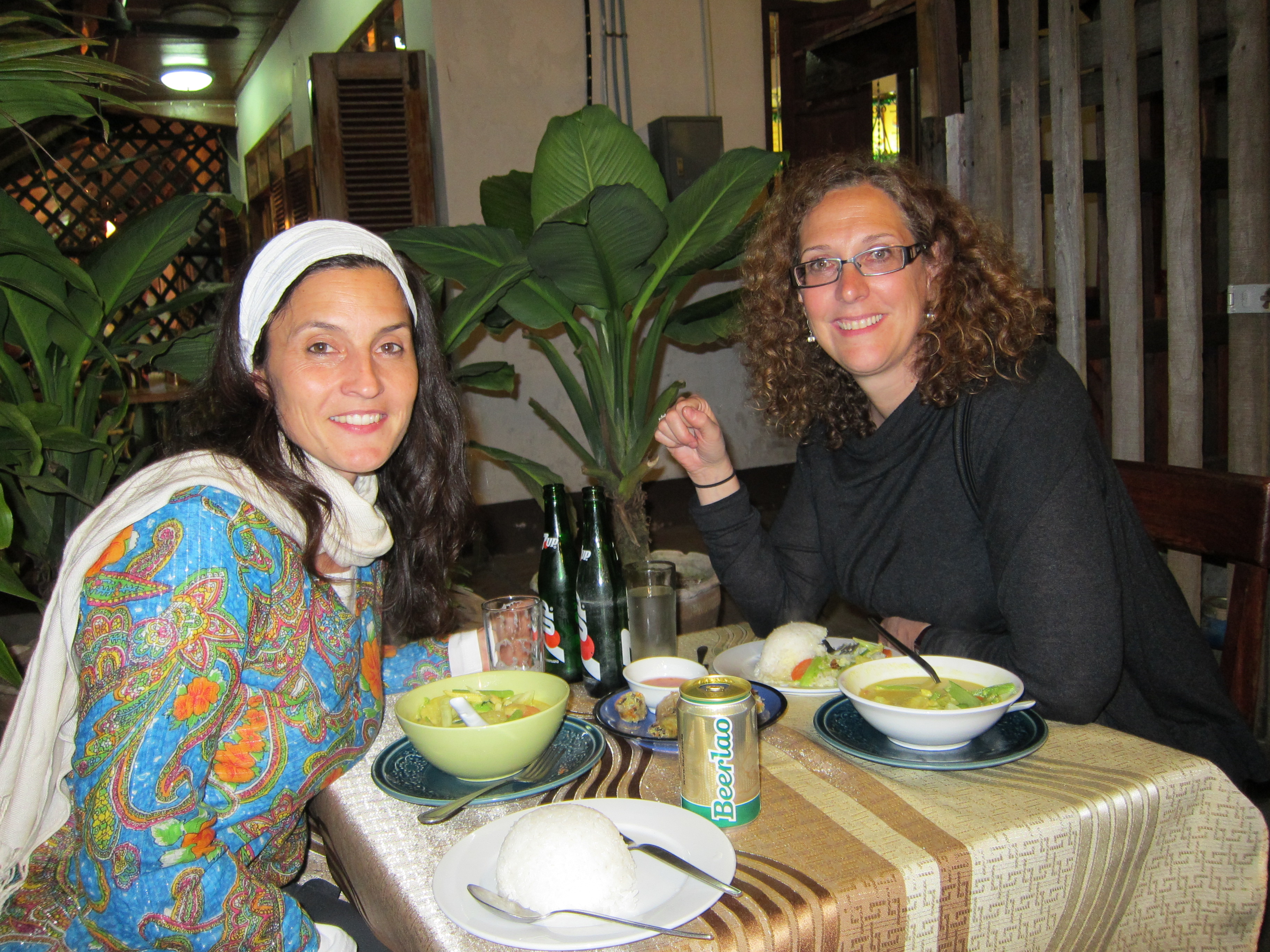
As I stood waiting for a taxi, a woman named Sandra (from Switzerland) asked me how immigration went. We had chatted very briefly at the airport in Hanoi and were on the same flight. I shared my self-imposed debacle. What happened next was totally unexpected. Sandra graciously offered to give me US money to pay for my visa. She had expressed the same concerns about me having surrendered my passport. I kept saying ‘are you sure?’ and ‘I will pay you back’. In response she said ‘I know you will’. I was so touched to have the trust of a total stranger. In total, I had 10 minutes of conversation with her before she offered the help. Travellers are a nice bunch of people! Once I paid my dues and with my passport securely in hand, we shared a taxi into LP and exchanged information.

The next day, I journeyed across town to her guesthouse. She wasn’t there, so I left a note indicating the time I passed by, suggested dinner at 7 that evening, and wrote that I would pass by her guesthouse to pick her up.  I went about my day visiting the various temples, wandered the markets and shops, and enjoyed people watching. I ran into Sandra at the palace and as soon as I saw her I asked ‘did you get my note?’. She said she hadn’t and asked ‘did you get mine?’. We shared the content of our notes and discovered that almost word for word they were exactly the same. We shared a laugh and agreed that our meeting at the airport was meant to be. She will be a friend with whom I will be in contact long after my travels. She too was travelling a long time. She was a great friend in LP and we hung out quite a bit.

I ended up staying in LP for longer than initially thought. LP was delightful and the people so kind and gentle. As it it a UNESCO protected site, everything is fiercely protected from greedy developers. There are no buildings higher than 3 stories and all are beautifully preserved.

I loved so much about this place – rising at 5 am to watch the hundreds of monks collect the daily alms from people on the street; settling into my morning ritual of Ovaltine and some kind of deep-fried donuts at a local coffee shop; having beers while watching sunsets on the Mekong; visiting the morning markets with bizarre veggies and meat products (rats, mice, or squirrels anyone?); eating from the buffets in the food market for a dollar; cycling about the town, and wandering the romantic streets in the night market.

It was here that I met fascinating people. I loved conversations with Thorsten, a man from Switzerland who has been travelling 5 months of the year for the past 27 years! Amazing! When i asked him which countries he hadn’t visited, he noted only 5 countries – Bhutan, Japan, Korea, and a few others that I cannot recall. His tales were fascinating.

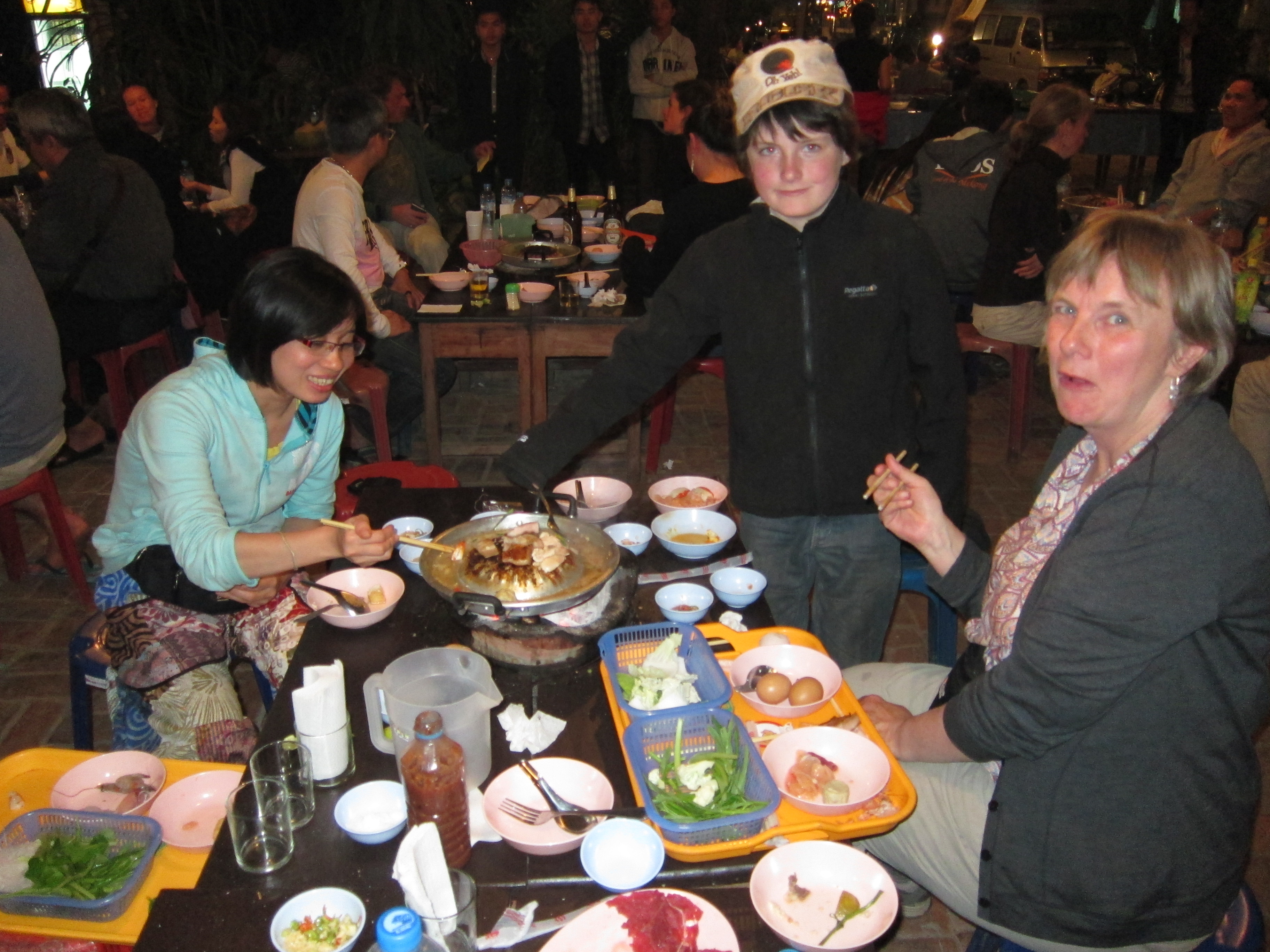
Julie and Fintin Fox from England

It was also the place where I met Julie and her 8-year old son Fintin (Oxford, England) who were taking the year off to travel the world. What an adventure for an 8-year old. If I was a mom, this us exactly what I would be doing. I enjoyed sharing a couple of meals with them, although for one of them, I had food poisoning that I carried with me to Bangkok. They will be in Alberta in July and I hope to have them as guests in my home.

I enjoyed conversations with Dieter, a musician from Germany. He travelled overland to Laos from Germany and started his trip in August. It’s hard to imagine the number of trains he took. He spent 3 months just in China. In preparation for the trip he learned Chinese.

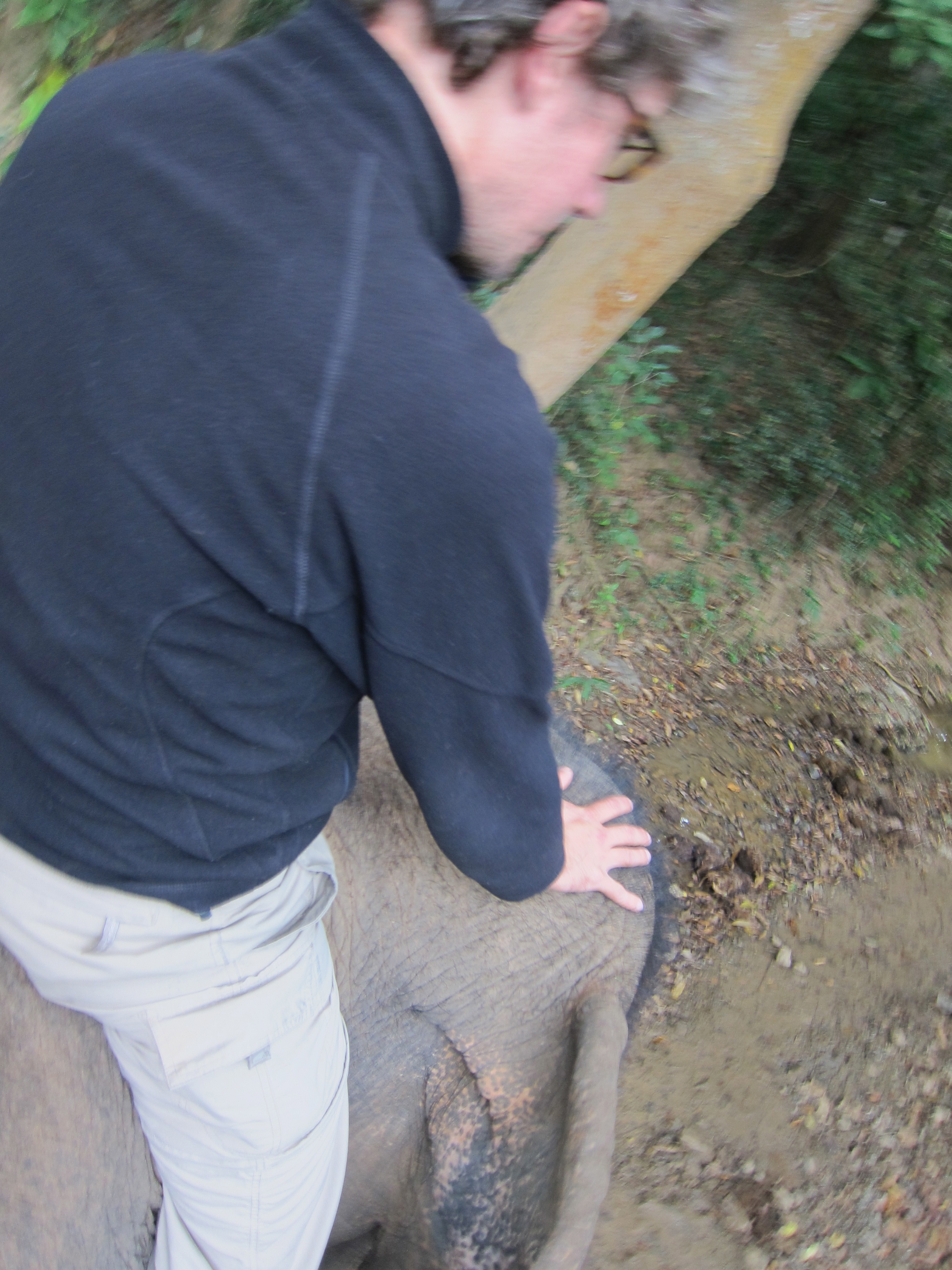
Dieter on the elephant.

Then there was Michael, a divorced 55+ year old man from England. He and Thorsten had met travelling a number of years ago and unexpectedly were in Laos at the same time. He was totally eccentric and hilarious. Sandra and I met them at dinner one evening and Michael gave us a rundown of European men and which to avoid or take as lovers. He talked non-stop, was hilarious. Post-dinner he sent me an incredibly detailed e-mail outlining an itinerary to Myanmar, Thailand and several other places. The details included times of trains. His memory and recollection of details was admirable. He was also a Jehovah’s Witness which didn’t really fit with his consumption of alcohol (well, he is a Brit). Oh and the email ended with some scripture references – maybe it does fit.

The people I have met have made this journey extra special. I have been constantly impressed by people and their stories.

I will find a way to return to LP…..hopefully the next time I will be able to share it with someone from home. Sometimes that’s a hard part of travelling independently – seeing beautiful things and having grand experiences but being on one’s own. It is so hard to fully describe what happens on a daily basis and nice to share it with someone.

Luang Prabang was lovely and a nice refuge to recover from the craziness of Vietnam. I was sad to leave. It is a place that I will definitely go back to and to date, it is at the top of my favorites along with Chiang Mai.

SaPa, Vietnam: A Land of Magic & Challenge

From December 13-15, I spent 3 days in SaPa, a 9-hour train ride north Hanoi. It was actually not bad. Train rides always allow for opportunities to meet people and share stories. I bunked with Reece & Sam from Australia and Liz from England. I don’t think any of us slept because of the noise factor mostly. We arrived at 5:30 am in Lao Chai, a town 2 km from the Chinese border. We still had a 2-hour bus ride to SaPa.

SaPa, a town of about 30 thousand people, lies at an elevation of 1650 meters. It’s known for its lovely mountain landscape, tiers of rice paddies on very steep terrain, various ethnic hillside tribes (e.g. Red and Black H’mong, Red Zao, and Dzay tribes), trekking, and the highest peak in Indo-China, Fansipan.

I spent the first day orienting myself, walked through the markets, and fled the multiple tribes women who stalked me to buy stuff. The weather was very chilly and it prompted me to buy a North Face shell, wool socks, mitts and a hat. There was no way I could be there without the gear. By far, it was the coldest place I had visited since leaving Canada at the end of October. Weirdly, the weather did bring a sense of comfort. It was that and a return to mountain scenery, something I love.

I met up with fellow travellers, Joshua and Amy, a couple from Australia. We initially met in Hanoi on a bike tour. As it turns out, our travel itineraries were almost identical and over 14 days in December, we met up in various places to share a meal and stories. They are gems! I will be keeping in contact with them long after our journeys are complete.

When I met up with them, I was a bit upset about the state of my hotel which was horrible! No hot water, no heat, totally filthy with dirty and hole-filled towels that were obviously not changed from the previous guests. It was so cold that i could see my breath in the room. When i asked for a heater, i was charged extra for it. Not cool! It was that or freeze my ass off. I had my little meltdown with J&A who persuaded me to leave and book a room at their hotel. leaving the room only meant a $10 loss, a pittance in exchange for something better. Packing up, I instantly felt a sense of relief. It’s not a good feeling being in a place where you don’t feel all that safe. I slept well in the new place. While it too was on the chilly side, it was safe, clean and I was with friends.

For the next two days, I went on a trek into the mountains. I was in a group of 4 along with our guide. We were Mehdi and Redouane, brothers from France, Go from Japan, and Ngoc, our guide.

The first day was spent walking 12 km through villages of the various hillside tribes – the Red and Black Hmong, Red Zao, and Dzay tribes. There were definitely great points, but again in the land of Vietnam, it was hard to escape the perpetual pressure to buy. Even in the isolation of mountain peaks surrounding me, I continued to hear, ‘Madam, you buy something from me?’. I couldn’t seem to get away from it. I ignored the requests and turned my attention to the magical landscape and company of my fellow trekkers. We had in common the desire to immerse ourselves in the nature of Vietnam – the land away from the perpetual hum of the motos, the unceasing crowds, the smog, and the visual pollution of signage, power wires, and sidewalks so packed with merchants and motos that one must resort to playing a form of automobile/moto dodgeball.

We hiked to the town of Ta Van where we spent the night with a local family. The family consisted of a mom and 6-year old We. The father was away at school learning the local handicraft trade. Power in the town went off at around 9:00 pm so the evening was spent eating dinner cooked by the mom, and sitting around the kitchen hearth fueled by wood and rice husks. We were entertained by We who was insistent in her teaching us 1 to 10 in Vietnamese. We in turn tried to teach her the numbers in English, Japanese, Moroccan, and French. She was delightful and a load of fun!

Oh, and there was the ‘happy water’, a form of rice-derived moonshine. Think of grappa, a very potent form of grappa. A bottle was set on the table and our guide Ngoc encouraged us in our drinking to keep warm. I managed only three shots, which was more than enough. We gave it a good effort and while we all had very red faces, we did not finish the bottle.

Sleepiness from the day came. We slept in the loft of the house on simple mats under the protection of mosquito netting. There was no heating but the blankets were warm. I have to say that it was probably the best sleep I had in several weeks of traveling.

We set out early the next day, this time covering terrain that was a bit steeper and definitely muddier. There were poor villages that we passed through. We visited one family’s home and it was a reminder once again of all the advantages and ammenities we have in our western living. A family of 5 lived in a home with dirt floors, no running water or visible plumbing, no windows or insulation against the cold, and simple and dirty bedding (I only saw 1 queen-sized bed). It was a shared accommodation with hay, the rice crop and a menagerie of dogs and chickens.

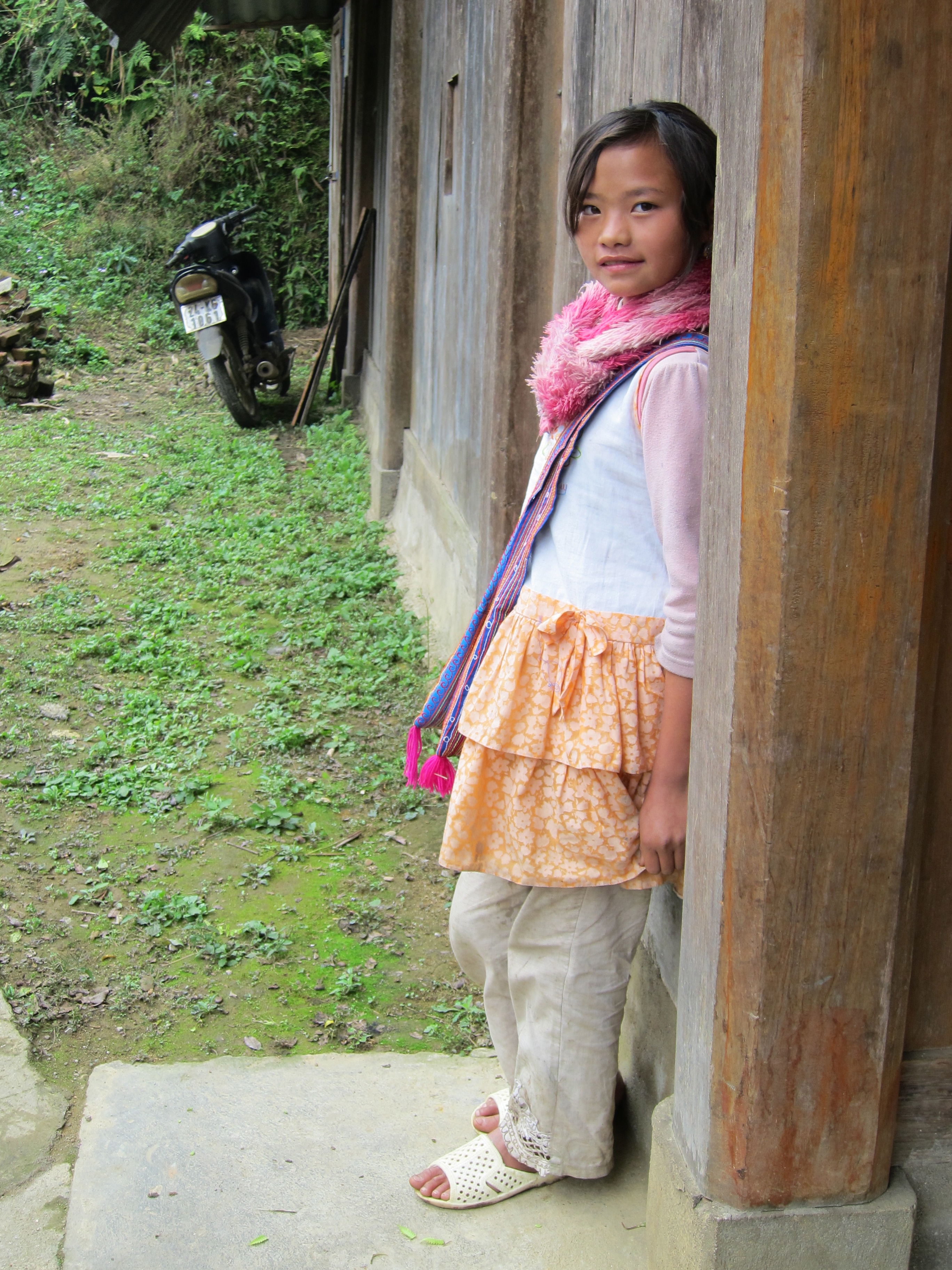
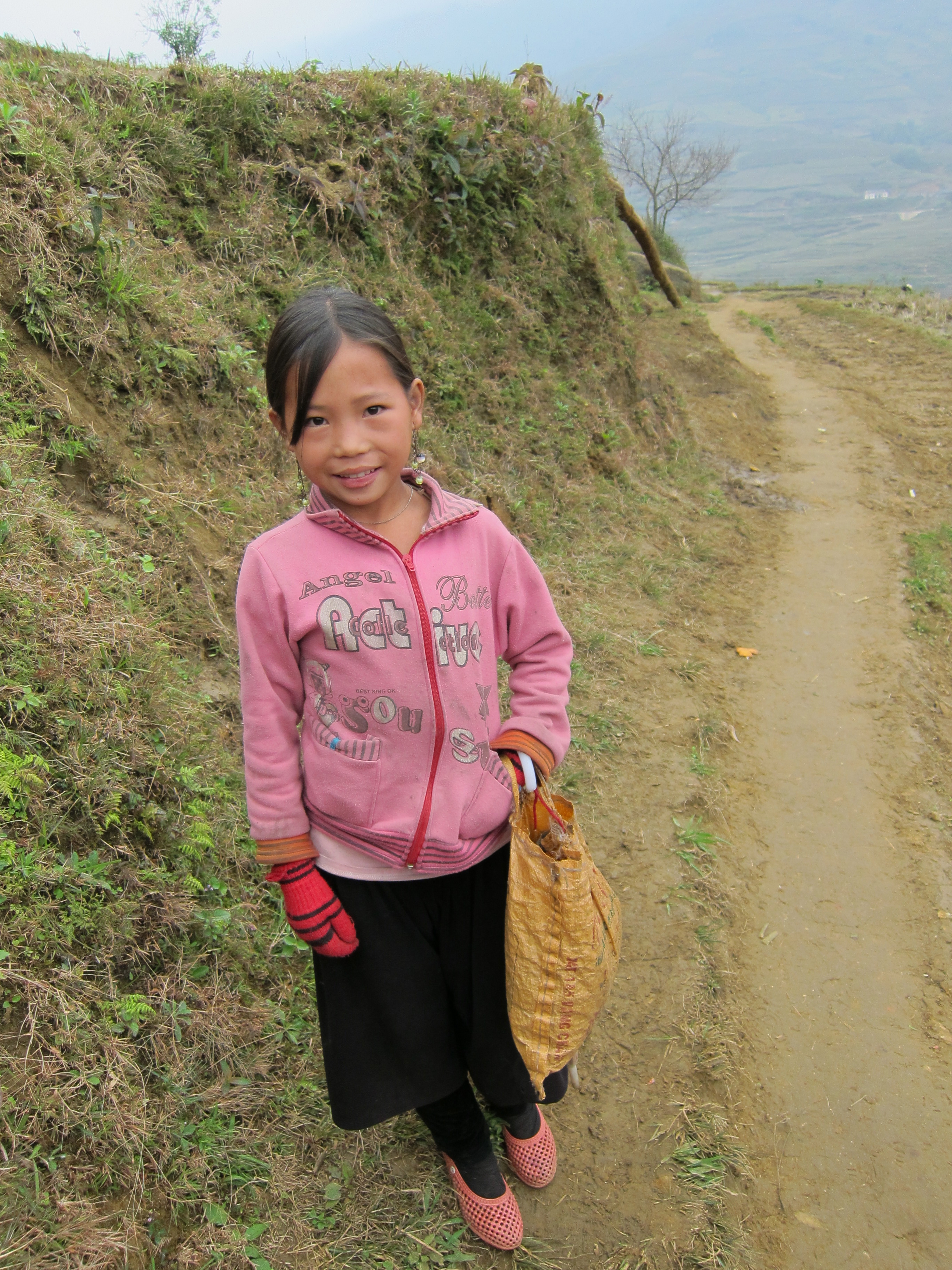
I have been challenged in ways unimaginable. One of the challenges on my visit to SaPa came in the form of Xia (?Shia), a girl of about 10 years.
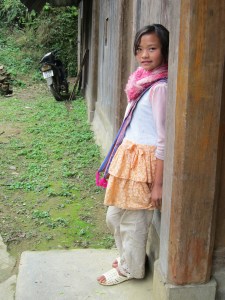
The shy Xia.

As we were having breakfast outside and preparing to leave the home stay on the second day of our trek, I noticed Xia sitting at the side of the house. She appeared shy in nature, stealing periodic peeks at us, and was playing a game with stones, equivalent to the childhood game of jacks. She sat there for at least 40 minutes, watching us and playing her game. As our home stay in Ta Van was 200 meters off of the main path, I assumed that she was the child of a neighbor.

When we left and proceeded with the trek, she began to follow us and we were soon joined by her friend Vi. I engaged in conversation as they spoke basic English. I asked about school and they indicated that they attended in the afternoon, which is typical of children in Vietnam. To accommodate the numbers of children, school is attended either from 7-11 a.m. or 1-5 p.m.

Xia and Vi followed us for 1 hour and 45 minutes. As the distance from their village grew longer, I wondered aloud to them if their moms would be worried. I indicated that they should turn back lest they be late for school.

On a couple of occasions in steeper and muddier places, they told me to take their hand for support which I did. I found it comical that they were in their ‘jelly’ plastic shoes easily scrambling about the terrain while I was in my Merrell hikers struggling in places.

So what was my challenge….?

Our group made a stop at a beautiful waterfall overlooking the slopes of steeply tiered, harvested rice paddies when Xia and Vi approached me. They approached me with a request for money. I asked them why. Essentially, I was met with the response that since they helped me clamber through some steep spots, they wanted compensation. I was astounded. I did not pay and for several reasons. First, I was pissed. When I accepted the helping hand it was with the belief that it was being done with the motivation of kindness. How naïve was I? In my mind, I started the inner dialogue with ‘If I was in Canada on a hike and came across someone having difficulty negotiating the path, I would stop, offer help, offer my hiking stick…..etc.’
‘But this is not Canada’, I reminded myself.

I declined payment on a second level, that doing so would be reinforcing for the girls and would keep them out of school. Obviously, trekkers before me had paid them. They followed us for 1 hour and 45 minutes. To go that far they had to have the thought that I would pay. I was also upset in thinking that our group (me in particular, perhaps?) were targeted from early in the morning, from 200 meters off of the beaten path at our home stay. It all started with a game of jacks….I felt manipulated.

Xia and Vi pestered me further. They left and about 2 hours later I saw them at a rest stop at another hillside village. They were tagging along with some other trekkers. At this point in the day, it was the afternoon schooling time and sadly, they were not in school. I guess they told me what I wanted to hear.
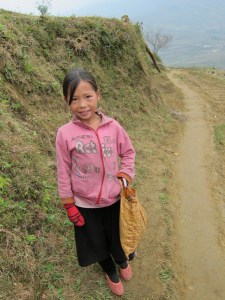
Xia’s compadre Vi

It was a challenge to me on the idea of kindness, that the extension of kindness happens automatically for some, while for others it might happen with different underlying motivations. Perhaps my mistake was that I was responding with a naïve assumption that it was simply a kind gesture with no strings attached. My preference is that I continue to respond with this assumption about others, and that I hold onto naïveté. Question: is it naïveté?

While initially mad, I also felt sadness about the experience. Sad that the girls were missing school, sad that the parents probably had a role in their daughters’ presence on the mountain, and sad that poverty can change how some people approach others. I take it as one experience of many on this journey.

And damn it, I am hell-bent on holding onto my naïveté!
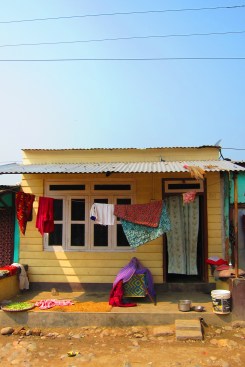
Beautiful Ha Long Bay, Vietnam

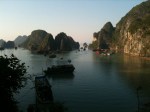
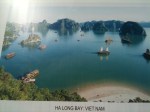
December , 2011 – I recently came back from a 2-day boat trip to Ha Long Bay. HLB is in north Vietnam. It was so beautiful and thus far, my favorite part of Vietnam. It was the only place in Vietnam that I wished I had more time. It was a reprieve from the intensity of the many places I visited in this country.

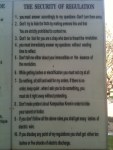
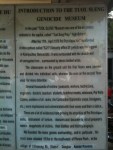
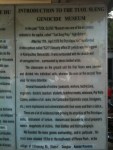
S-21, The Tuol Sleng Genocide Museum

November 2011 – Note: This blog posting contains photos that you may find upsetting.

Cambodia has a painful history and visiting the S-21 in Phnom Pehn is a must. It is a part of the history of this country a

nd coming here (and The Killing Fields) is crucial for a full understanding of what happened and why Cambodia finds itself in its current state.

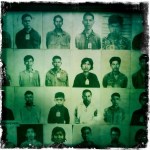
S-21 was a former high school that was turned into a place of interrogation and torture by the Khmer Regime between 1975-79. During that time, about 3 million people were killed and 20,000 were victims of S-21. Of the 20,000, only 8 lived to tell the tales of the horrors committed there.

It was here that the educated class – doctors, lawyers, professors, engineers, monks, nuns, and anyone else seen to be a threat to Pol Pot’s vision of a pure communal society – were brought to be tortured and killed. Family members of these individuals were also brought here. They too needed to be eliminated so as to avoid these members engaging in revenge killings against the regime.

Meticulous records and photographs (taken when the people entered and after their death) were kept.

As I wandered the various buildings looking at the vast sea of photographs of victims and exhibits showing the methods of torture, I had a lot of thoughts.

I thought about my circle of family and friends and how if we were here in Cambodia during the regime that we all would have been targets. That it would have been highly likely that we would have been murdered for the simple reason of not being from the peasant class, of being a member of the aforementioned professions, and of being a city dweller. I thought about the elimination of all these individuals, the loss of a generation of educated people and the tremendous long-term impact on the country.

Simply said, Pol Pot, his ideology and regime screwed this country.

I thought about the methods of torture and in particular, water-boarding, one of the methods used here. People who support this kind (or any other kind) of torture baffle me. When is torture ever right?

It was not an easy visit.

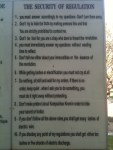
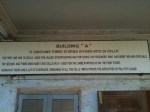
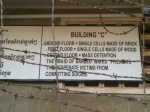
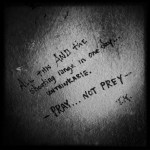
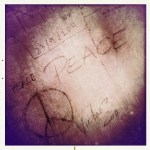
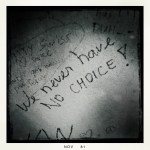
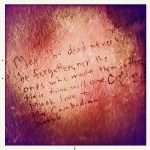
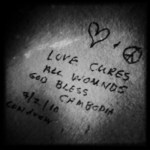
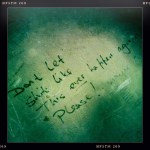
I have included some photos of the site to give you an idea of what it was like. In particular, I was fascinated by the graffiti that I stumbled upon underneath a stairwell. I am not alone in my sentiments.