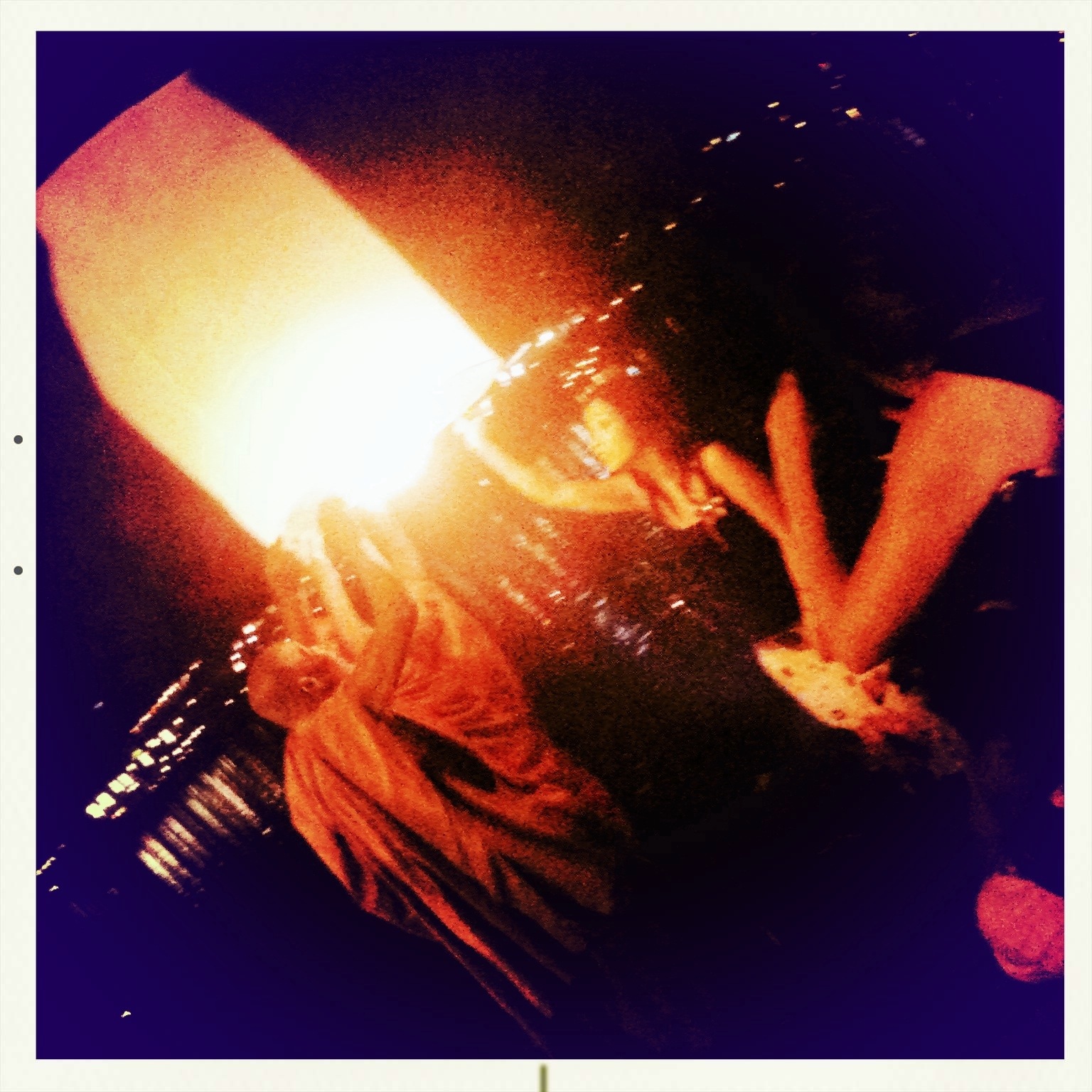
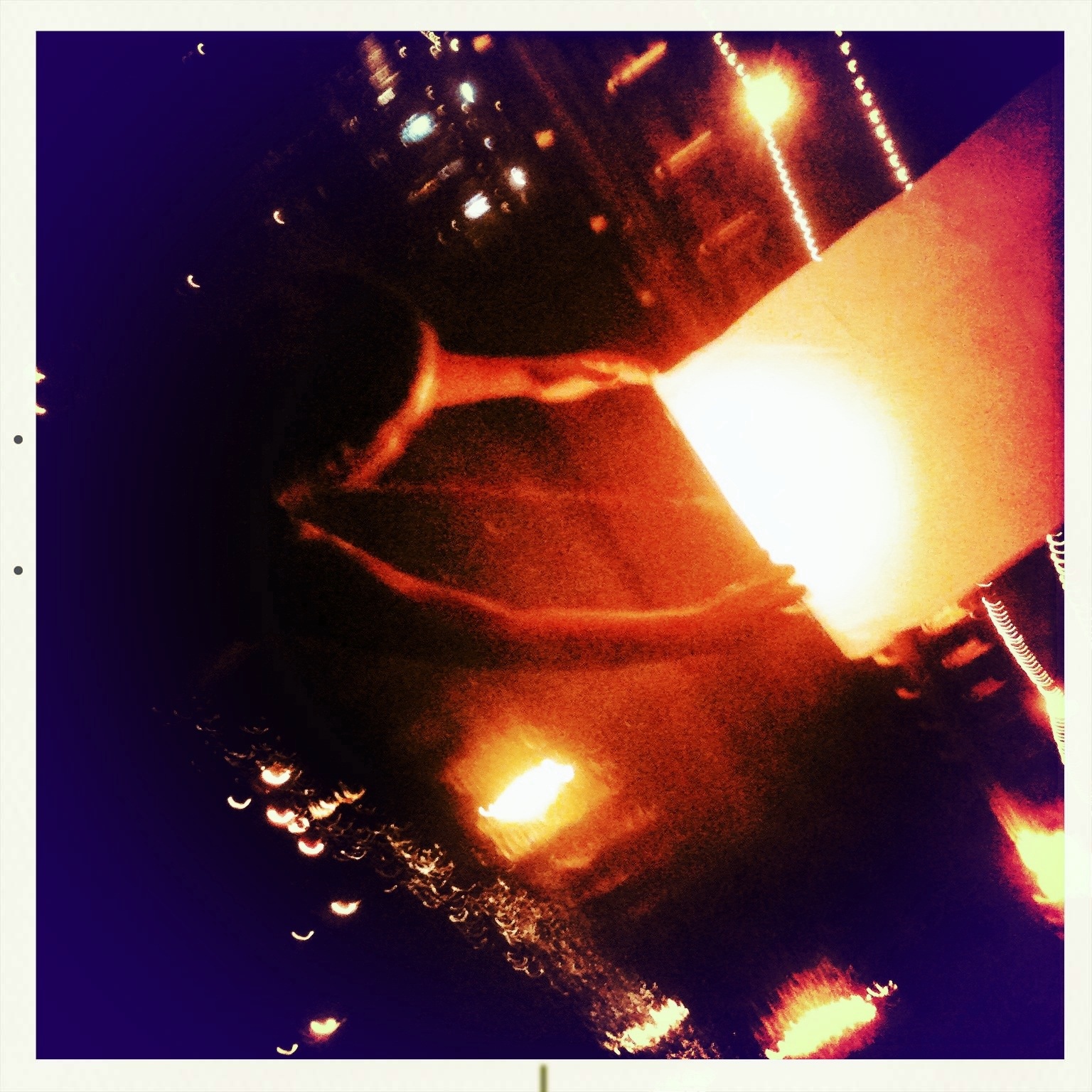
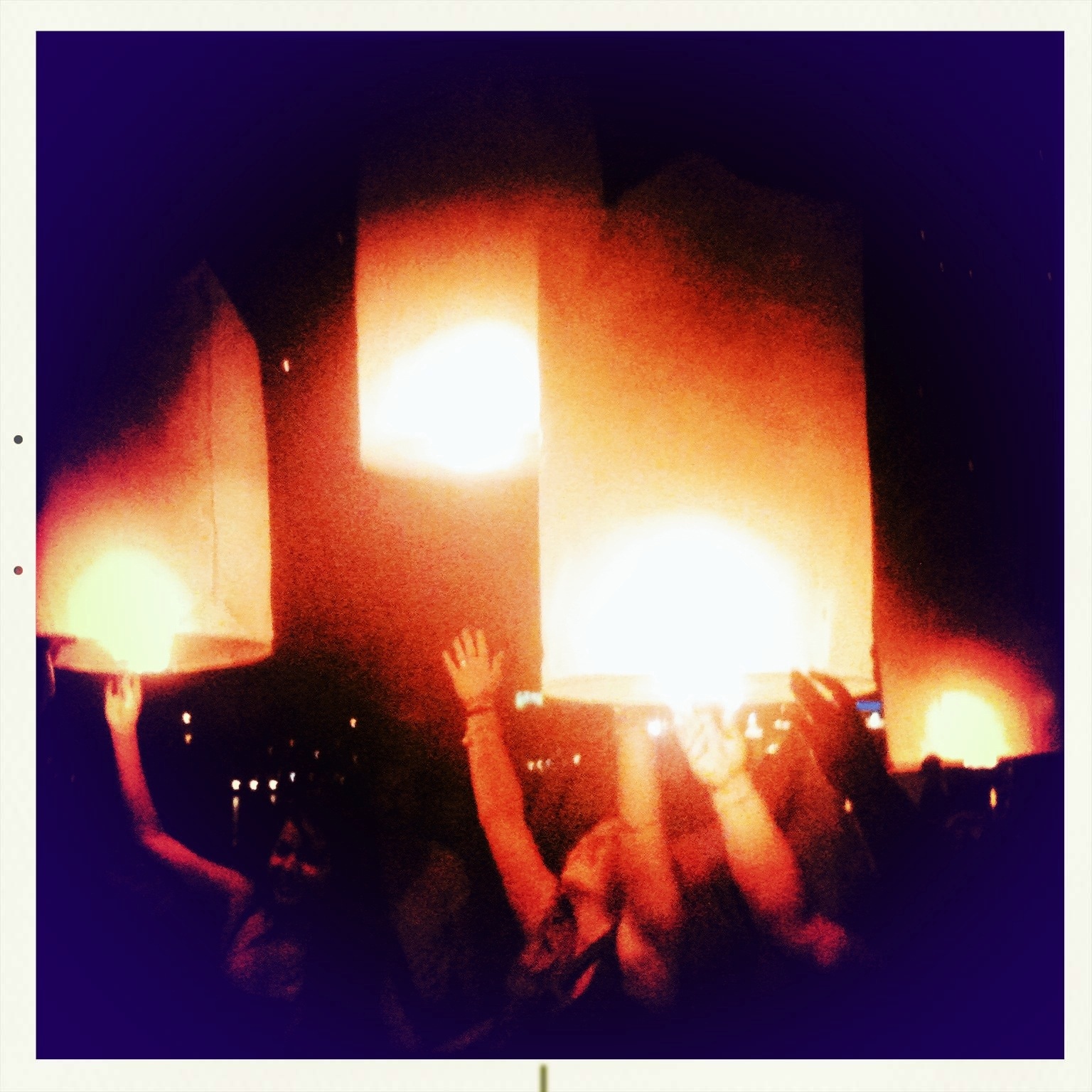
Cambodia 2011 – HFH Khmer Harvest Build: Day 4, November 18

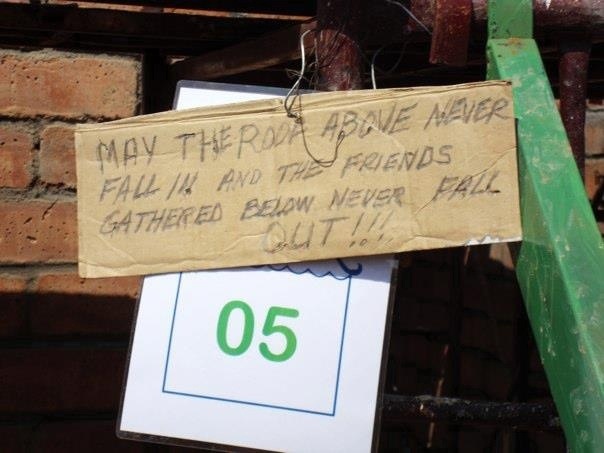
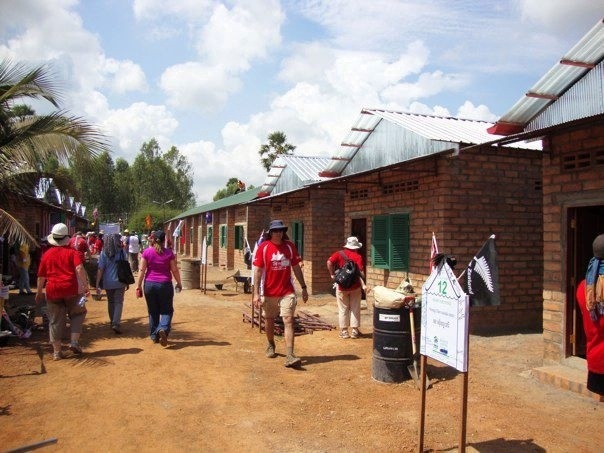
On Day 4, it was really amazing to see all of the progress being made on the houses. At this point, the walls were as high as they were going to get. It was time to raise high the roof beam (JD Salinger)!

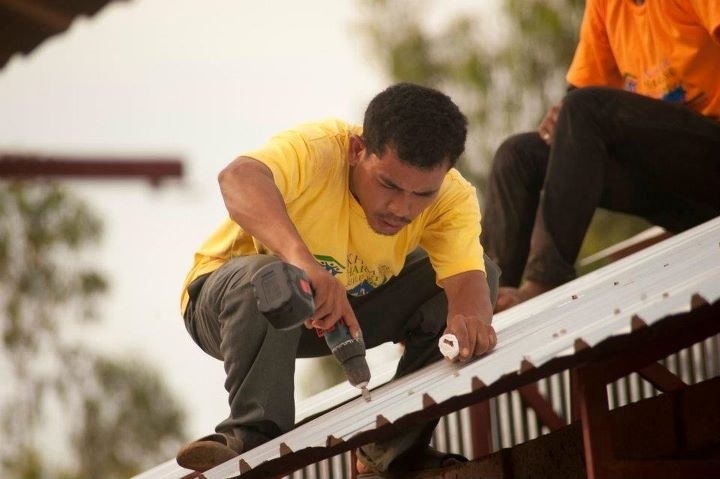
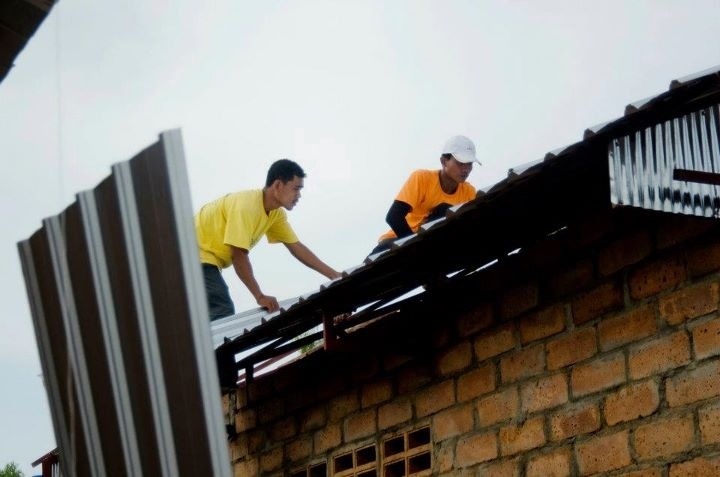
At the start of the project, I believe that the volunteers were to get up high and install the roof. This didn’t happen, which I think was a good thing. The roof looked pretty tricky and judging from the razor thin edges of the metal composite, it could have resulted in some serious cuts.

The Cambodian tradesmen ended up doing all of the installing. Those guys were incredible workers and did all of their work in flip-flops. I have decided that Havaianas are the official “workboot’ of Cambodians. These guys spent the entire week working in them. No steel-toed work boots for them! One wrong drop of a 20-30 pound brick and kaput goes a foot. Anyway, it was amazing to watch them work from below and on top of the scaffolding. Despite their footwear of choice, the were crouching and walking on the metal roof beams as assuredly as I was in my shoes on solid ground.

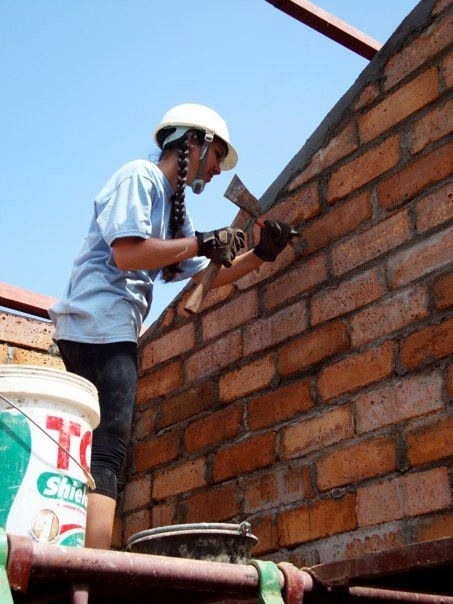
At ground level, we were all engaged in various tasks – cleaning mortar off of the walls, repairing and filling in the gaps of mortar, painting, and building the front door entry steps.

As things were getting done, others went to the farm and pitched in at other areas. I went back to the brick factory, carting and making bricks. Again, sweaty girl.

On this particular day, it was a mix of energy. On the one hand, a sense of harriedness to get things done for the families and on the other, a sense of things starting to wind down in the project. Regardless of the energy one was feeling, I think there was a sense of accomplishment behind it and anticipation of meeting the family.

The mother of the daughter whose family would have the house was on site. We all initially thought that she was the owner and it wasn’t until the next day that we figured this out. In any event, she was present and so lovely. I get teary recalling this. She didn’t speak English, and my Khmer is rather poor, but beyond words at a deeper level, there was the understanding of incredible gratitude. One didn’t need words to feel this. She seemed to take a liking to me. I was hanging out in the back of the house when she showed up. It was like she imprinted on me as ducklings would to their mama. She kept touching me – my face, my arms, and when I was sweaty, she wiped my brow. It was sweet. A couple of us had our cameras (for me the iPhone) and she kept wanting pictures of herself with me and others. You could see she was emotional. I thought she was the would-be-owner and all along, she was a mother who was feeling the emotions of her daughter, son-in-law, and 2 grandchildren becoming homeowners. A family who would finally have decent and safe shelter and hopefully the opportunity to break some of the poverty. That’s what housing does people. The palpable emotion of what was within me and what was apparent in the mother was a sign of what was to come. I was not really in tune with how much emotion (for me anyway) there was and would be taken by surprise the next day.

While the families will have a small mortgage and will pay off part of their house through sweat equity through giving back to HFH, it will help to free them up to focus on other things.

Im going to switch things up a bit and stand up on a soapbox. I don’t mean to offend anyone, for these are my personal observations of my time here thus far. Imagine if you lacked housing, medical care, clean water, a clean society without a lot of trash in your environment, toilets and plumbing, proper roads and other important infrastructure, food, or a sustainable income…..

If anything, this project has really resulted in an altered perspective of what poverty entails in a third world country, a perspective I lacked if I am going to be truthful about this. There have been moments on this trip where I have been taken aback and shocked by what I have seen. Of course, I will never fully understand what poverty is because I’m not in this predicament, but it has raised the bar of my own consciousness as to what I have, and what people here don’t have. The sense of consumerism and entitlement in western society is shameful. I’m part of this and I’m worried about returning and stepping back into that. I’m worried about my reactions to people who whine. I only hope that I can retain in my mind’s eye what it is like here and use that to be selective about what I whine about. For example, my loss of pictures on my iPhone. Enough said….
Cambodia 2011 – HFH Khmer Harvest Build: A Photo Montage of Days 1-3

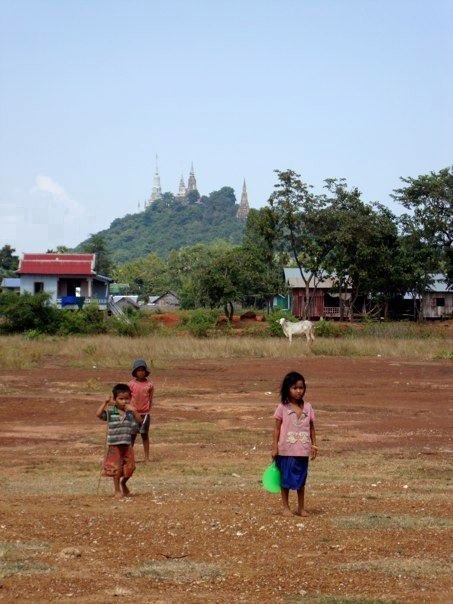
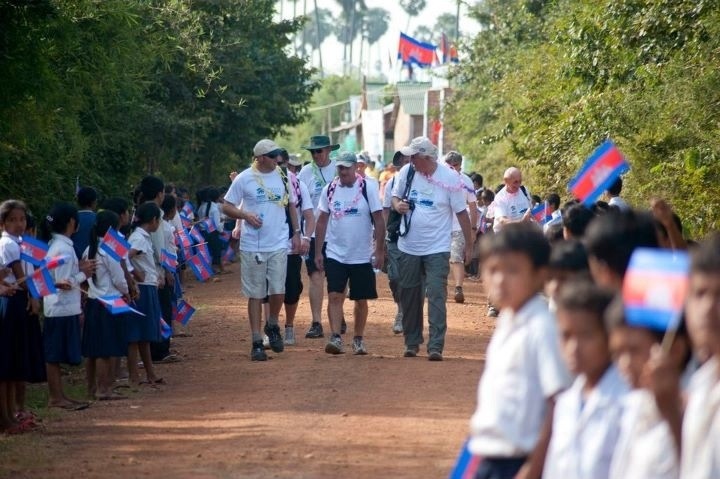
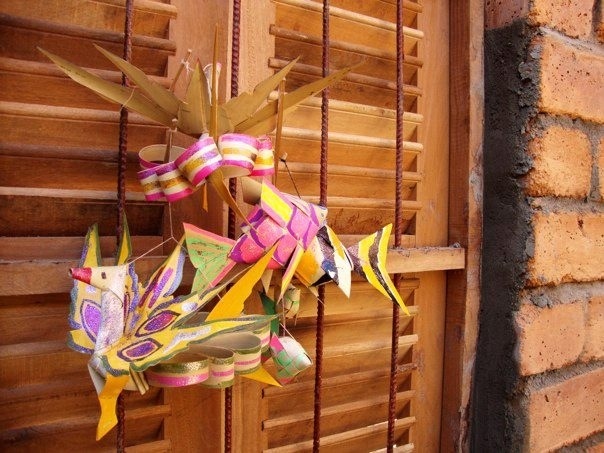
I have a few photos to post from the build. Thanks so, so much to Sherwood Kirk (Kansas) and Jordan Samuelson (Seattle) who graciously agreed to share their photos. They were team members of mine. The photos are an assortment of team members, Cambodian tradespersons, children on the housing site, the farm and surrounding countryside. More will be added as others share. Thanks again! I so wanted to share pictures that I had taken and these ones are a gift. Enjoy!20111129-230848.jpg20111129-230914.jpg20111129-230928.jpg20111129-230949.jpg20111129-231009.jpg20111129-230959.jpg20111129-231035.jpg20111129-231042.jpg20111129-231057.jpg20111129-231112.jpg20111129-231122.jpg20111129-231131.jpg20111129-231215.jpg
20111129-231322.jpg

20111129-231420.jpg

Cambodia 2011 – HFH Khmer Harvest Build: Day 3, November 17

Hey Folks:

I’m terribly behind on my postings so will try and fill you in on my experiences on the build.

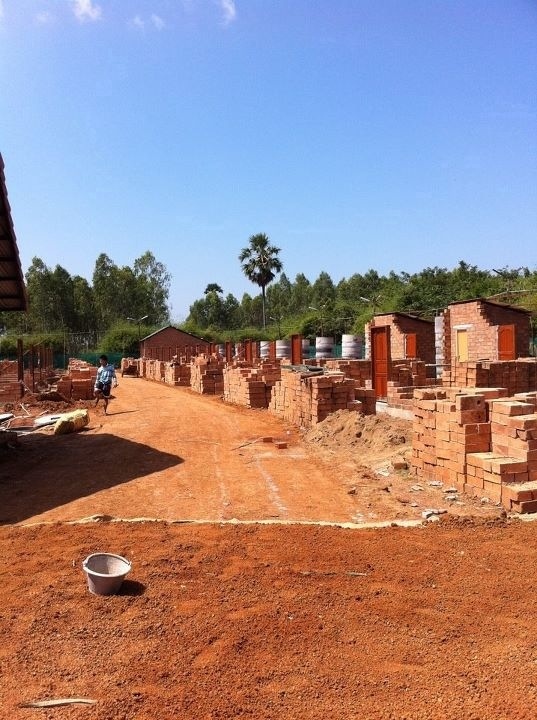
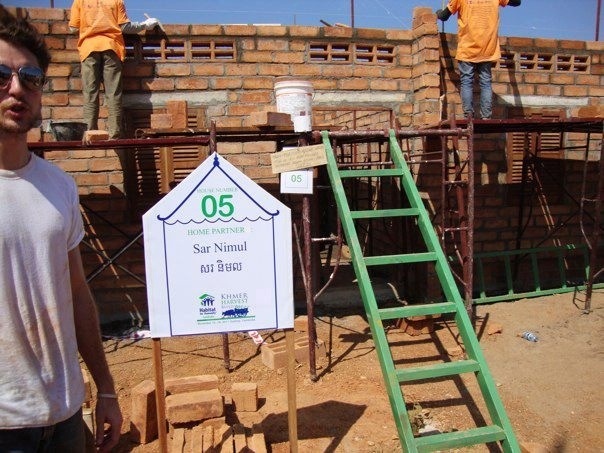
Twenty two homes were constructed on this HFH project. The house I worked on was a part of the row housing section. Each row house consisted of 1 single room of about 10×10 in size. Not large at all and hard to imagine that a family of 4 would be sleeping and living in that space. A small bathroom was in the back as well as an small kitchen area outside. A concrete cistern to catch rainwater off of the roof was also built in the back. Aside from toilet plumbing, there was no running water installed in the home.

When we arrived on Day 1 of the build, the only the foundation and three rows of bricks were laid. On this day, the goal for all houses was to get to row 10 of laid bricks. On Day two, the goal was to lay bricks to row 17.

As mentioned in a previous post, I dropped like a fly and was a vomitous mess in the afternoon of Day 1. It left me with a “praying to God and crying for my mama” experience.

I was given the option by my team leader Hugh to remain in Phnom Penh to rest up during Day 2. I struggled with it for a moment, but went with the team. On a super build, the work is intense and projects are only one vs. two weeks in length, so missing a day would have been huge for me. The thought of doing this left me teary and with support of team members (thanks to Dr. Rikkhi, Sis, Nekane & Sarah for tending to me!) I went in. It was a great decision despite some morning queasiness.

On Day 2, I did not lay a lot of bricks. I took it easy in the morning and by the afternoon, i was up and at it. I hauled a lot bricks and buckets of cement to those who were up on scaffolds laying bricks. I am sure that my arms are buffed up from all of the hauling. Each brick was about 20-30 pounds. At one point when I was hauling 2 buckets of cement, a couple of Cambodian workers made some gestures to me that I interpreted as comments on my heartiness. I stopped, dropped the buckets to show them my biceps and they laughed. Cambodian people are quite small in stature. I feel like a giantess in their presence. I have to chuckle because I think that the Cambodian craftsmen were impressed by the women on my team. We were a team of 7 women, 2 men and our team leader Hugh.

On day 2, scaffolding went up and there were 4 team members up there in the brutal heat. I am surprised that there weren’t more who got heat stroke. Needless to say, the team met the goal of getting to row 17.

Day 3 – on the build, there was an opportunity for each of us to visit the farm and make bricks. I had that opportunity to do that. I spent the morning on the farm and afternoon on the brick task.

The farm was awesome! On the last build in this area (the Jimmy and Roslyn Carter Build), the farm did not exist. My understanding was that they decided to create the farm for people in the area to be more self-sufficient. The farm creates jobs and products sold create revenue for the community.

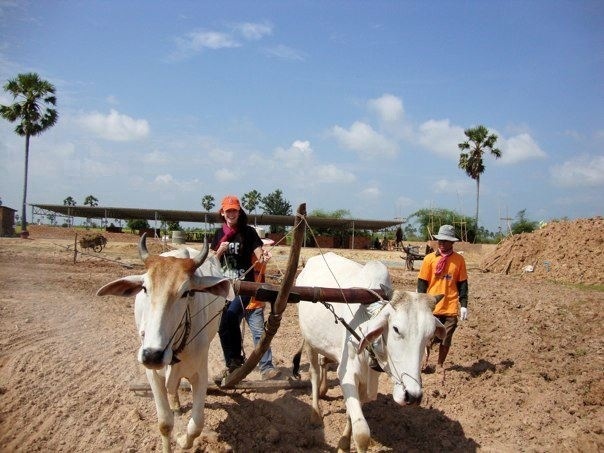
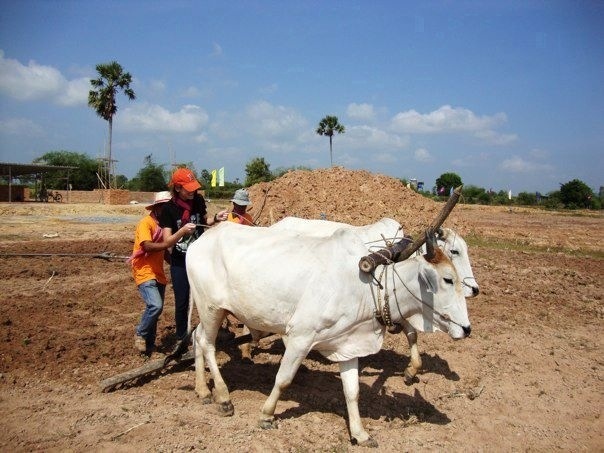
So what did La Contadina Cambodiana do? I did ploughed the dirt with an ancient tool (think Little House on the Prairie) with a team of Brahman cows, went over it with another team – the device that I had to stand on while leading the cows looked like a giant metal toothbrush. I fished Cambodian style with the giant nets, rode in the back of an ox cart, shoveled manure and planted cabbage. It was delightful. It was also an opportunity to think about all of the labour that goes into farming, how farming in Canada used to be, and how the creation of super farming machines has resulted in the demise of farming. Here it keeps many people employed – it might not be efficient, but it offers something.

I spent the afternoon in the brick making area. This was not easy work. In fact if any one shows up thinking that there easy tasks on a HFH build, they will be shaken into reality quickly. Working in this area, the cement mix concrete, sand and something else) for the bricks had to be made, delivered in wheel barrows and poured into molds. For the mold part, there is a whole set of steps to take. Once in the molds, they sit for a day and are then moved to a sunny area where they are cured (or baked) in the sun for 2 weeks.

I worked primarily on the molding and hauling of bricks to the curing area. I worked with two Kiwi’s – Peter and Nigel, who was about 70 years old. Nigel was a machine. We had to load up carts of bricks which weighed about 700 pounds. With Nigel at the helm of the cart, he was literally running with the filled cart to the curing area. Peter and I were behind trotting along and sweating profusely. After 2 trips with bricks, Peter had to say to Nigel ‘you have to slow down man’.

On the entire build I don’t think I have sweat so much in my life. I was a melty, sweaty mess the entire time. And I loved it – the satisfaction of the hard work and knowing it was for a needy, impoverished family. Having a home will allow them to move forward in their life from scavenging at a dump.

I apologize that there are no photos of any of this. A couple of days ago I had the distressing experience of having my iPhone completely wiped out when I went to get it unlocked. This was despite assurances that this would not happen. I was lied to over money and 800 photos/videos were lost. Photos showing the progression of the build are lost. Hopefully I will add them as friends upload them to Picassa for me to beg, borrow and steal. Thus, the reason for a longer narrative. I hope I haven’t bored you with the descriptions.

Stay tuned for Day 4 of the Khmer Harvest Build.

Cambodia 2011 – HFH Khmer Harvest Build: Day 2, November 16

I have a bit of insomnia – it’s 3:00 am Phnom Penh time. Thought I would give a mini update.

Day 1 – November 15. There are about 10 HFH volunteers, 4 Cambodian craftsmen and 1 translator working on the house.

The day started great but ended up in medic tent in the afternoon. The Canadian (moi) could not take the heat. It’s been 35C at least with super high humidity. I was vomitous, went home and crashed initially but then up until 3. Doc told me it was probably due ro my body being so revved up in trying to cool itself. I joked saying that I found a way to get a new t-shirt as other one was disgusting! TMI, I know, but it is part of my experience.

Day 2 – I was a trooper and went out. Felt on the mend. Spent part of morning in medic tent – nothing happened, just did it as a preventative measure. I got to sit under the fans in the company of the handsome Cambodian Doc, Ritti. Afternoon was awesome!

I have laid and hauled 20 pound bricks, more than you can imagine.

House is going up! Day 3 we’ll build and install roof trusses.

So much to say – love you all and know I am having a great life experience.

Will post pics later.

Baci

Magical, Mesmerizing Lanterns of Chiang Mai

Hey everyone:

I am a bit behind in my blogging because there is just too much going on. That, my friends is a good thing. I have had some wonderfully rich experiences thus far, and the Yee Peng Festival falls amongst these.

I had posted a couple of videos on Facebook, but I thought I would do a more thorough blog of my time at this festival. As noted in a previous entry, I was lucky enough to be there for 2 festivals: the Yee Peng and Loi Krathong. Both were equally beautiful and meaningful.

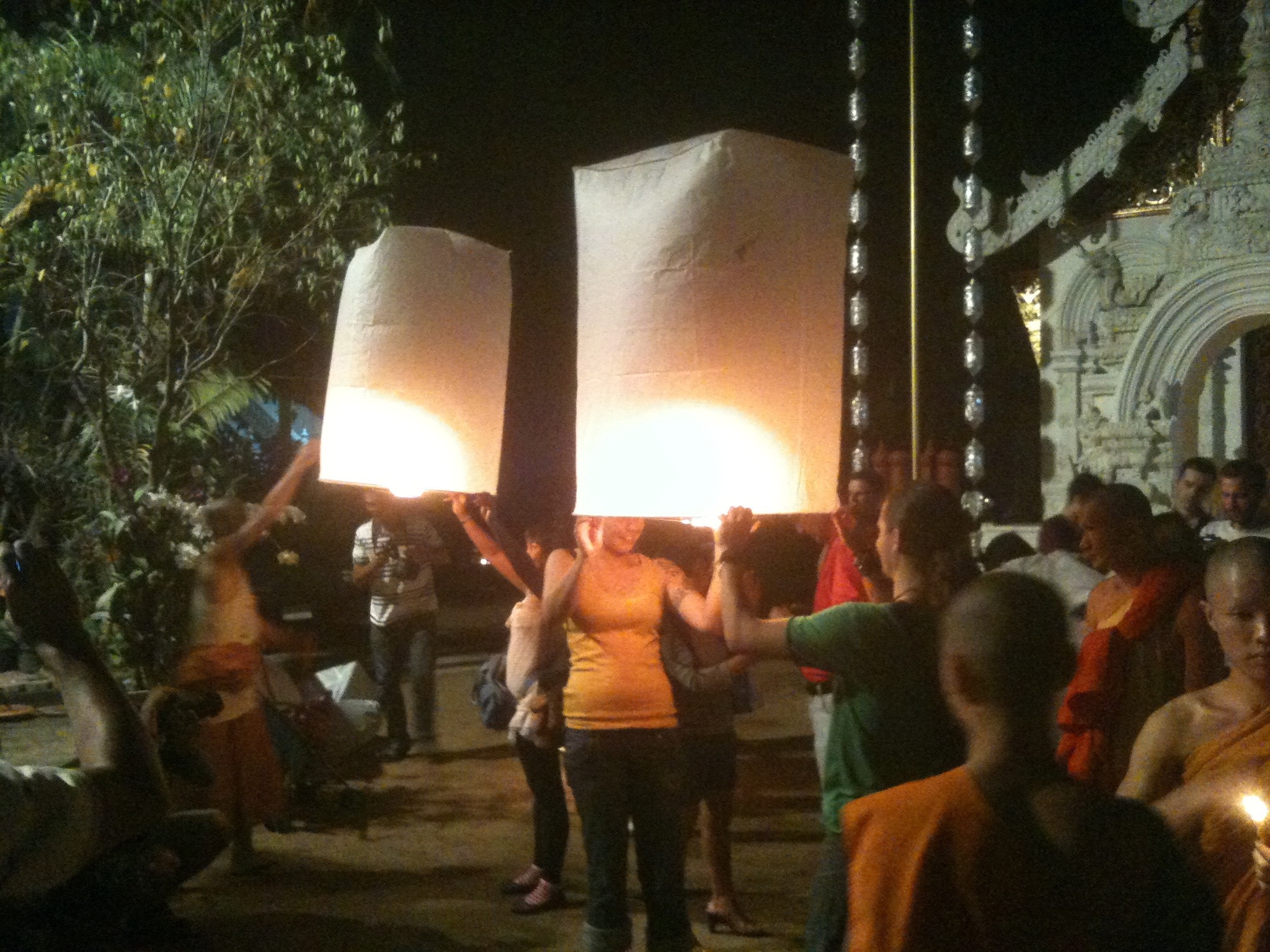
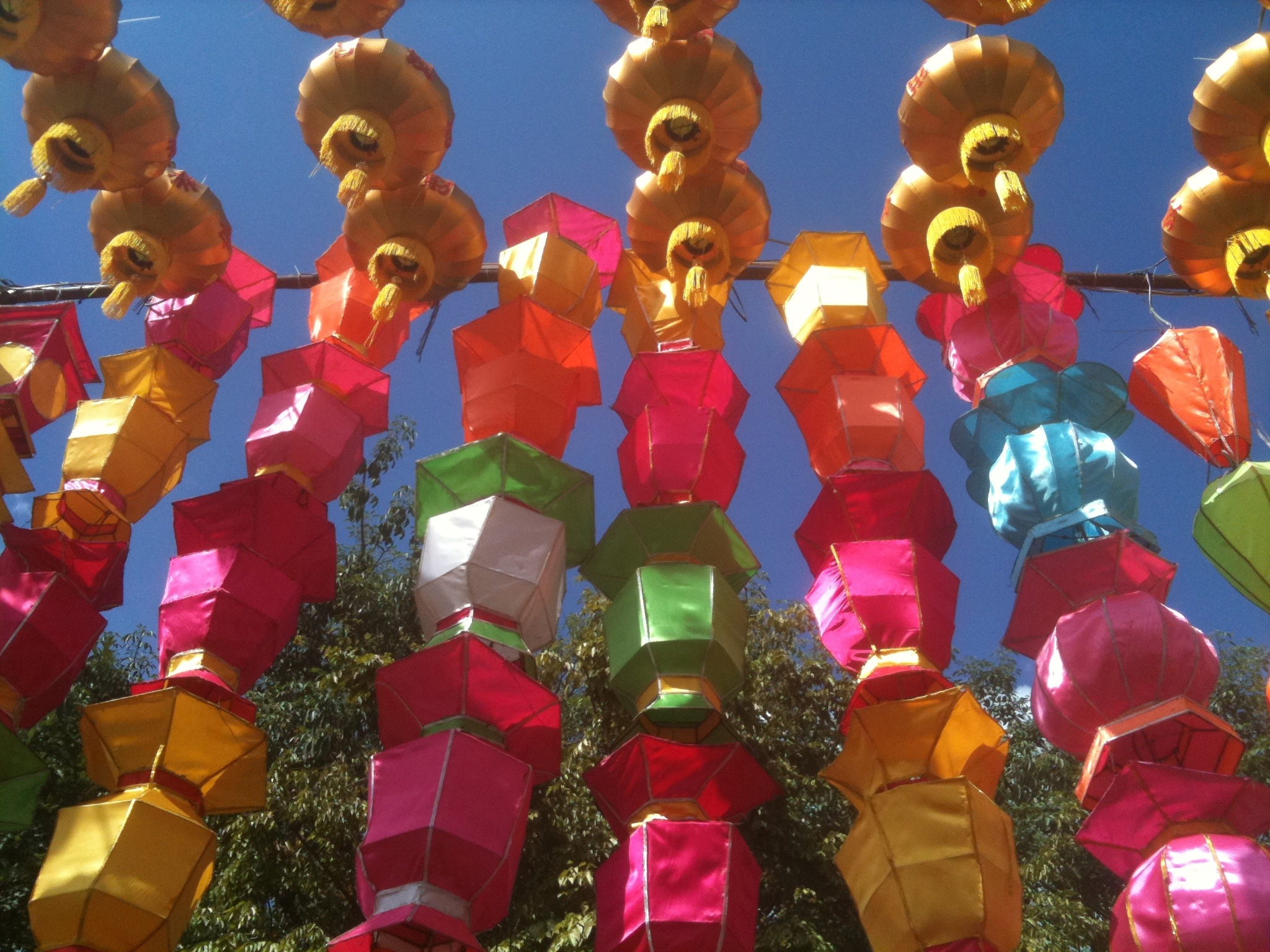
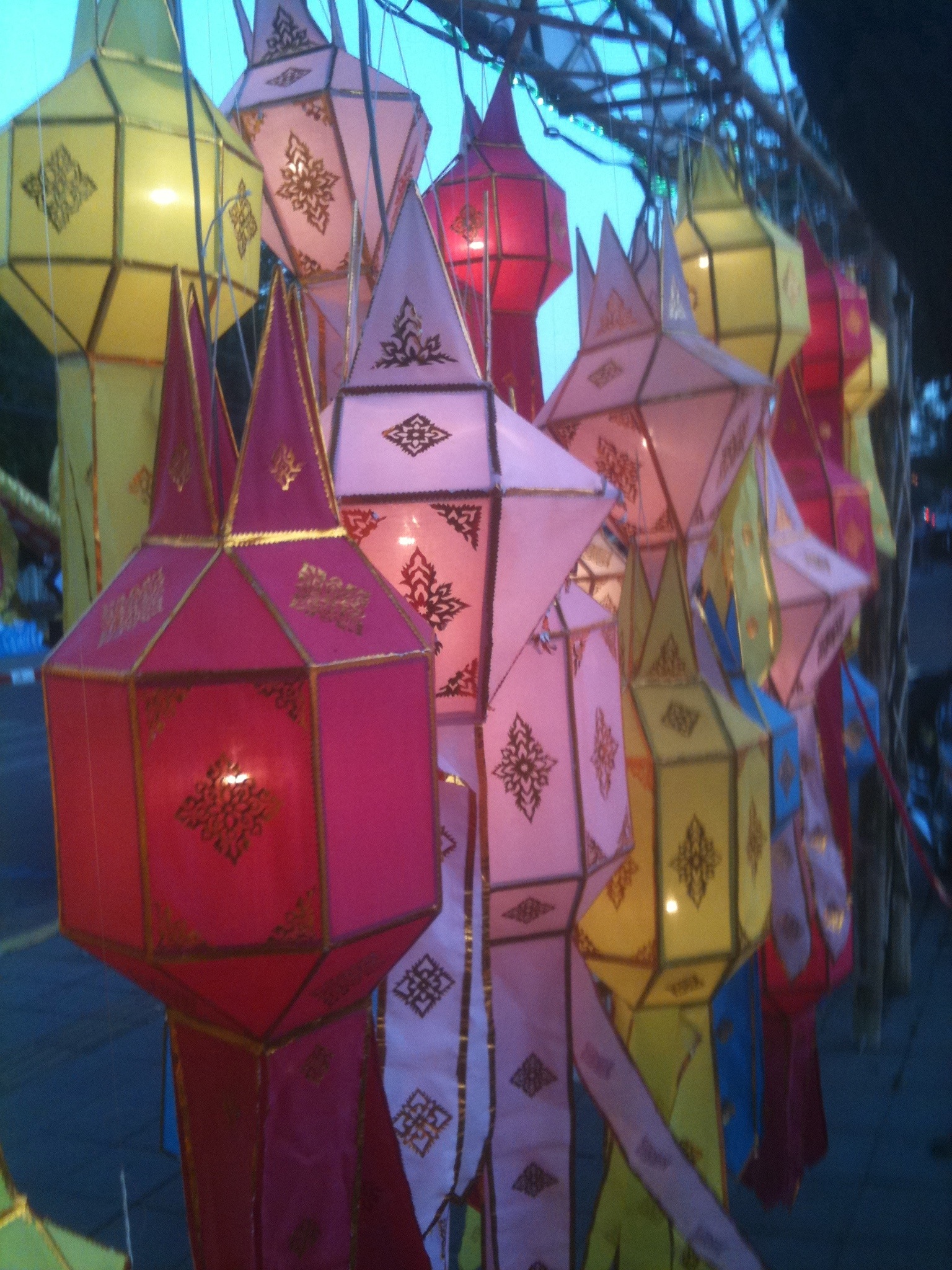
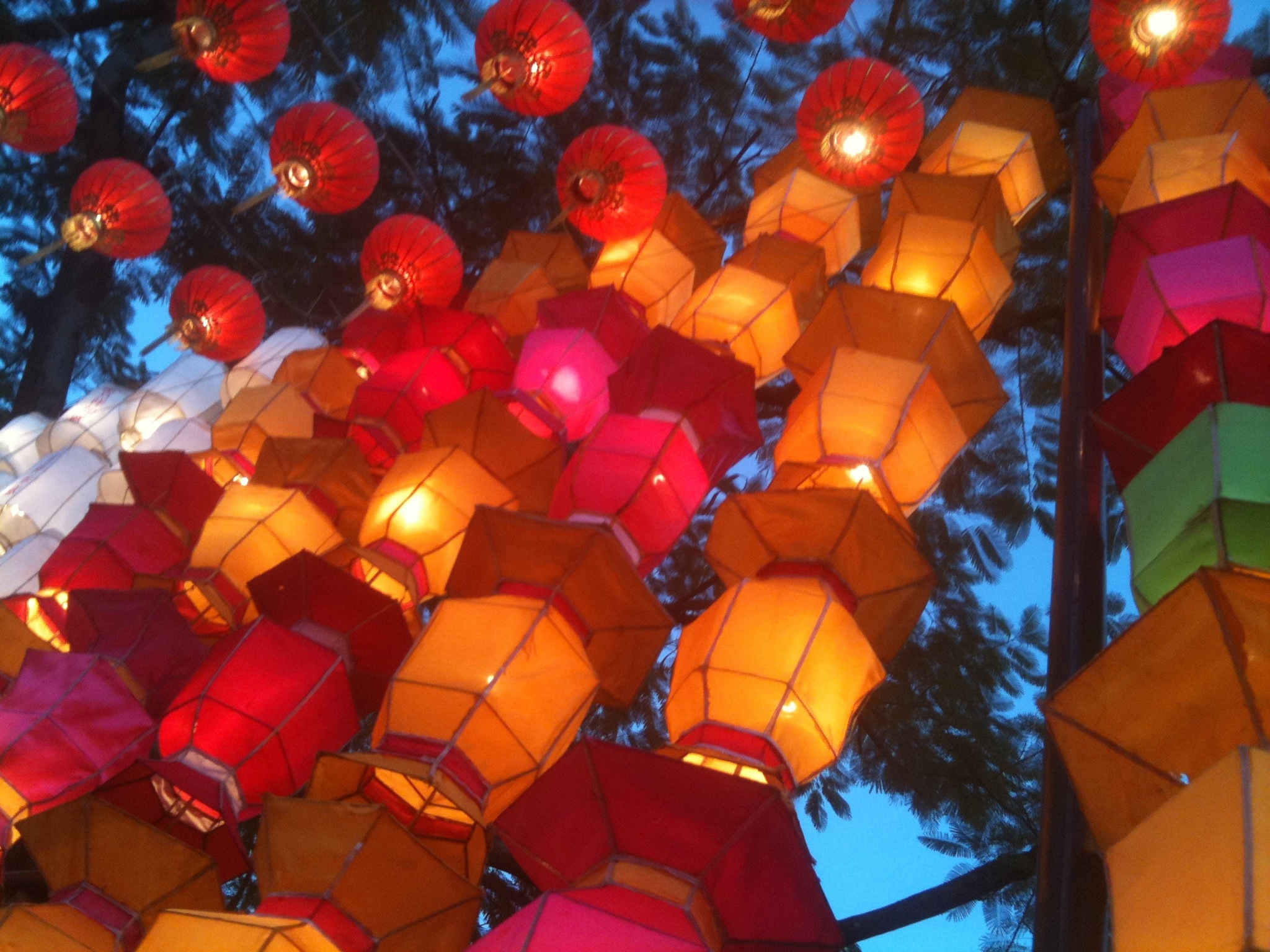
The time of the festivals was November 9-11, the middle day being the biggest because it was the day of the full moon. Yee Peng, the festival of light, involves the release of huge paper lanterns into the moonlit sky. The light representing newness, and the release of the lanterns symbolic of gathering and releasing all of one’s woes, pain and suffering of the past year. Loi Krathong is a thanking of the river for all it has given to the people over the past year. Both festivals are held during the first full moon after the end of the monsoon season.

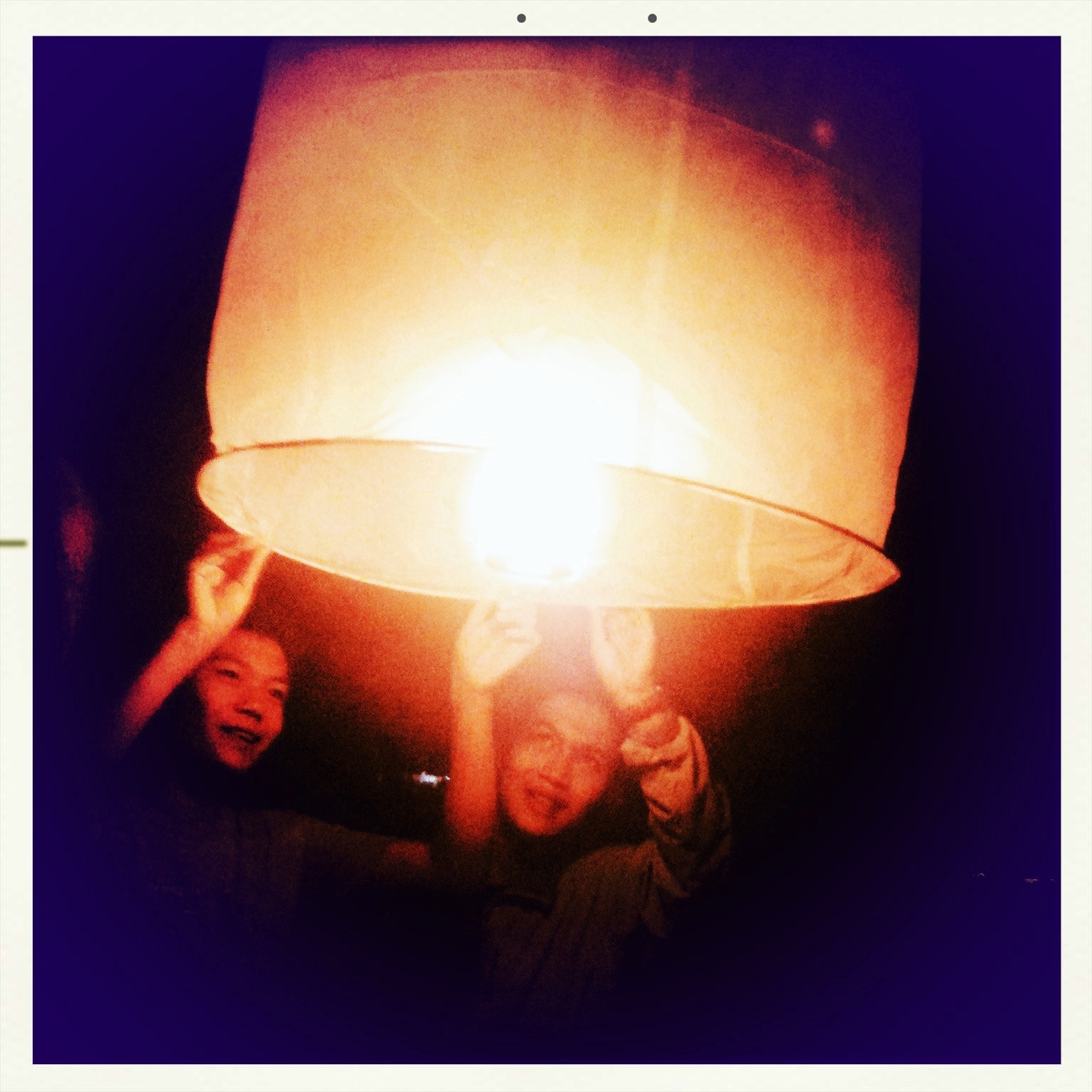
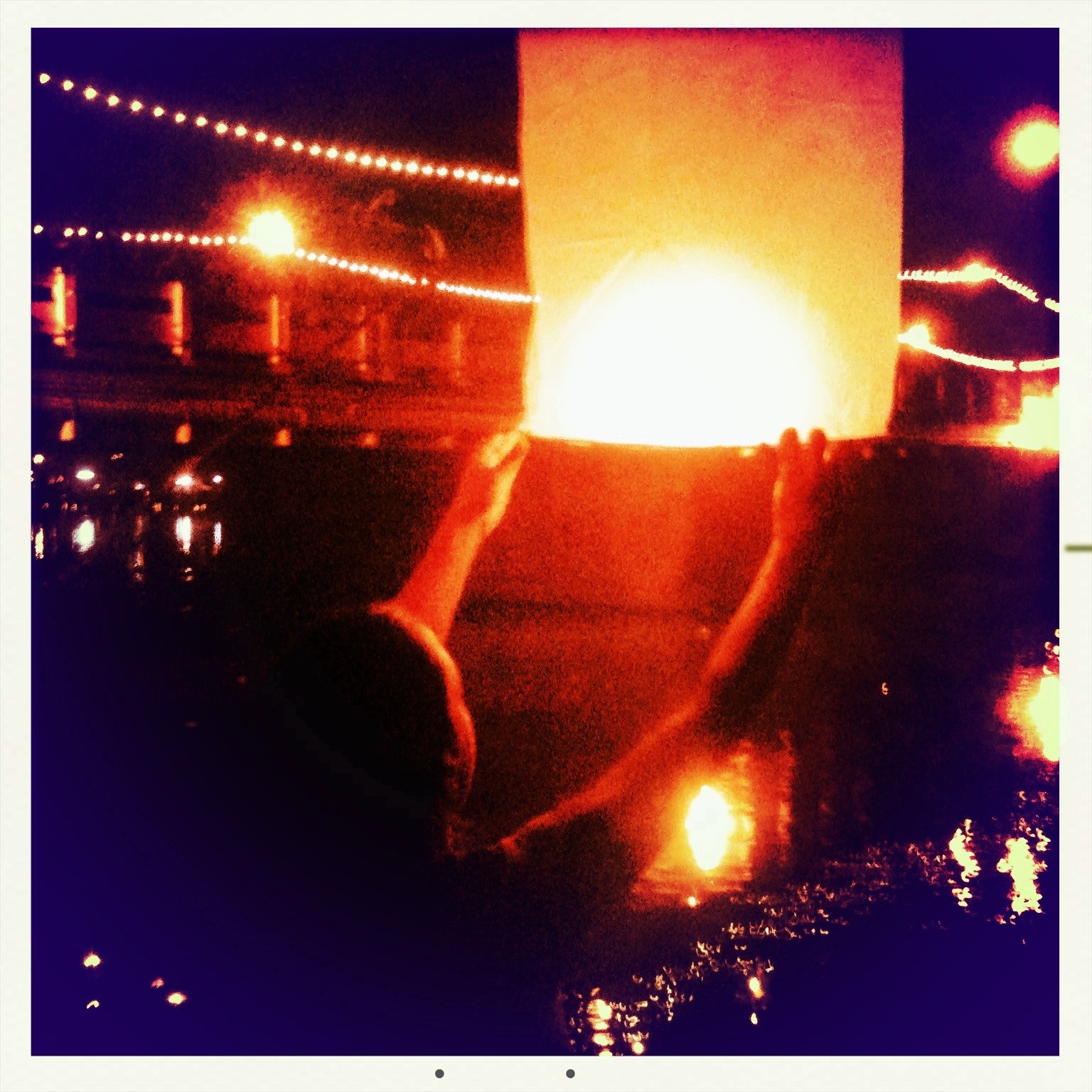
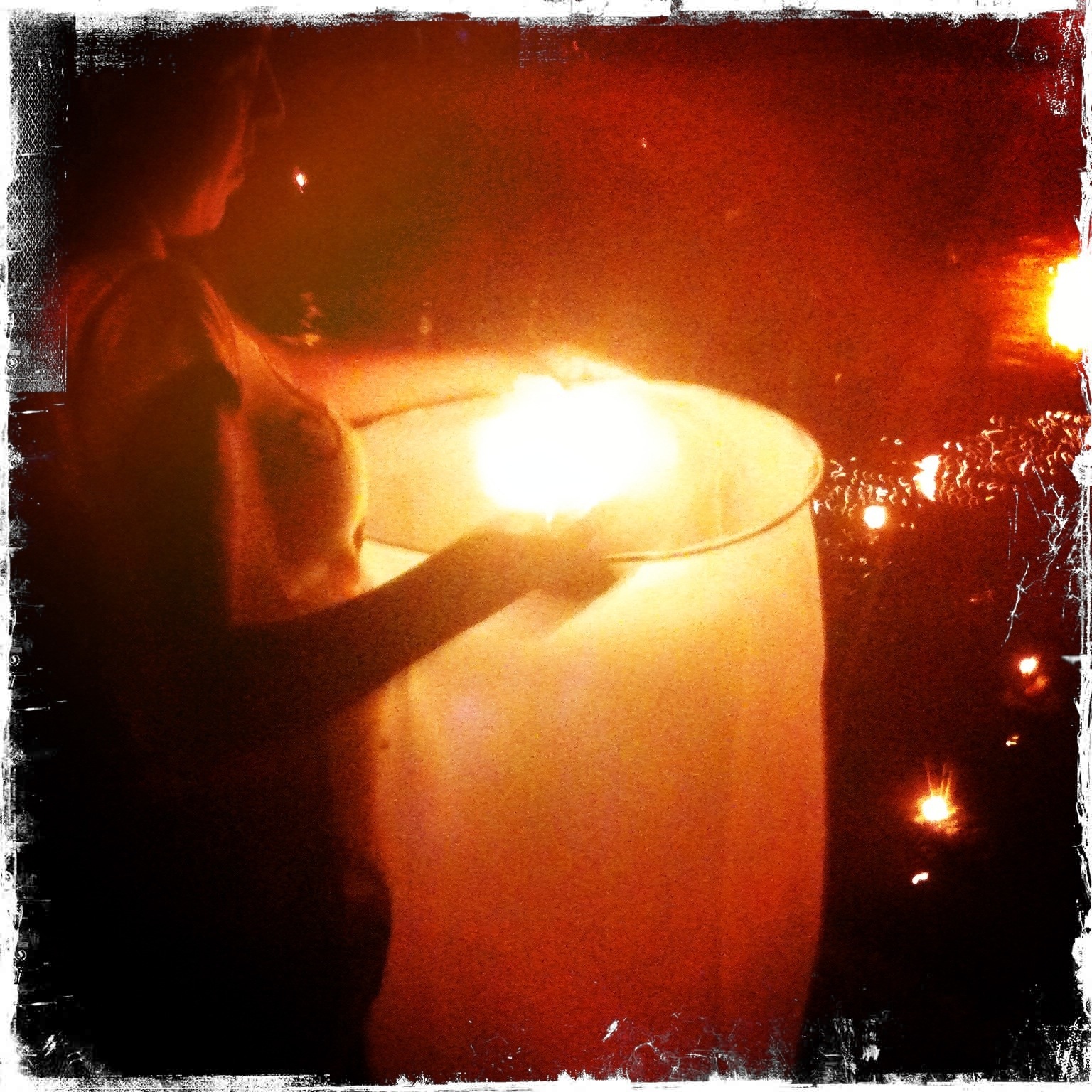
On the 9th, I spent the evening with Joe and Keith, pilots from Macau in town on business and the former being the husband of Friend Jennifer from Canada. It was welcomed company. For me, (and I think for Keith and Joe) the highlight of the evening was going down to the river, lighting and letting go of our lanterns into the moonlit sky; lanterns that symbolically took away our woes and bad luck of the last year. We were all equally mesmerized by the beauty of glowing the lanterns, of the sky dotted with the lanterns, and of the communal experience of preparing the for the lanterns’ release. For Joe and I, we both had this experience on our bucket lists. There was a sense of delight in taking this off of the list.

On this trip, I have to say that this simple experience has been the best experience thus far.

I was also there for the second night, November 10th. The experience was equally engaging and magical. What i did notice was that I longed for friends, my bro and a sense of having a community around me, of peeps dear to me. It was my first time since leaving Canada feeling this way.

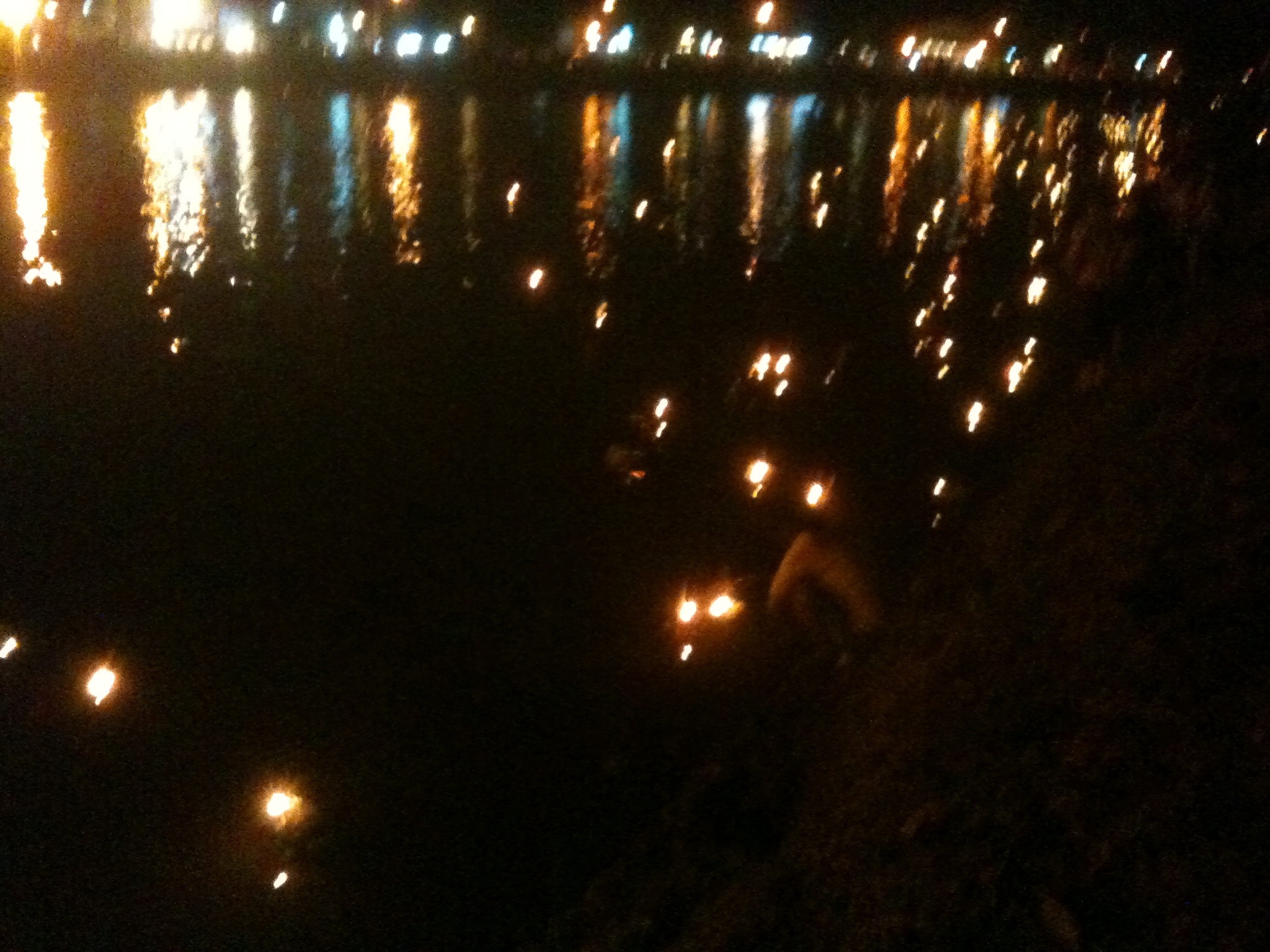
Lighting the lanterns is not meant to be a solitary activity and surrounding me were groups of friends, families, and fellow travelers sharing in this magical experience. I wanted a group of my own. I had a lantern and did find a kind group of locals who helped me with the task, but it was different from the night before of having that shared experience. I wish you could have been there. I did enjoy the evening wandering the banks of the river watching, observing, marveling and appreciating the beauty of it all. I can’t even begin to describe what the sky looked like. It was filled with thousands of lanterns over the course of the entire night. They were continually being released and there was no apparent end to the supply. My favorites
were ones that had firecrackers attached so that from afar the lanterns looked like slow moving shooting stars.

I got some pictures with my iPhone-not the best as I had accidentally destroyed my digital camera earlier in the day. A leaky water bottle camera in a purse are not great companions.

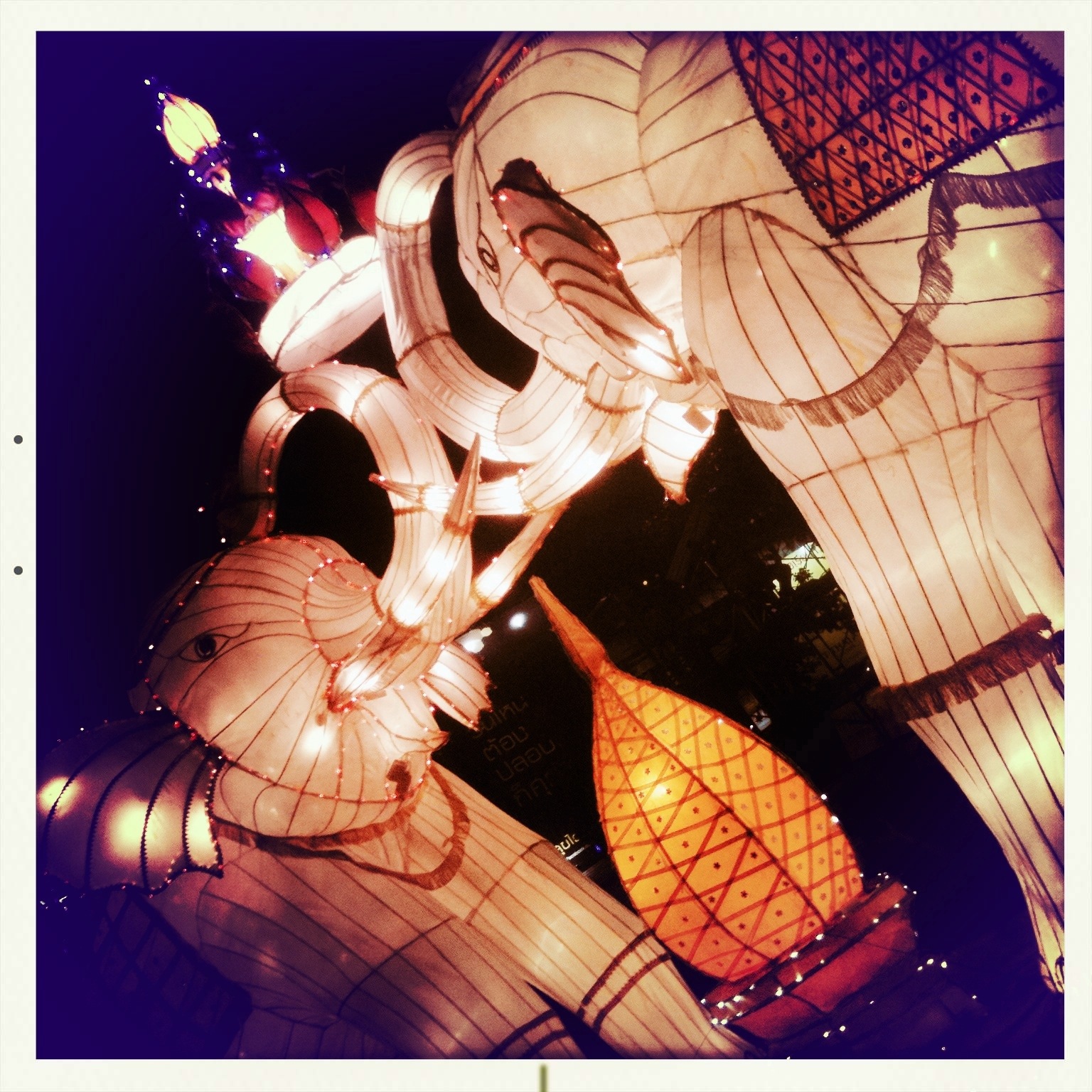
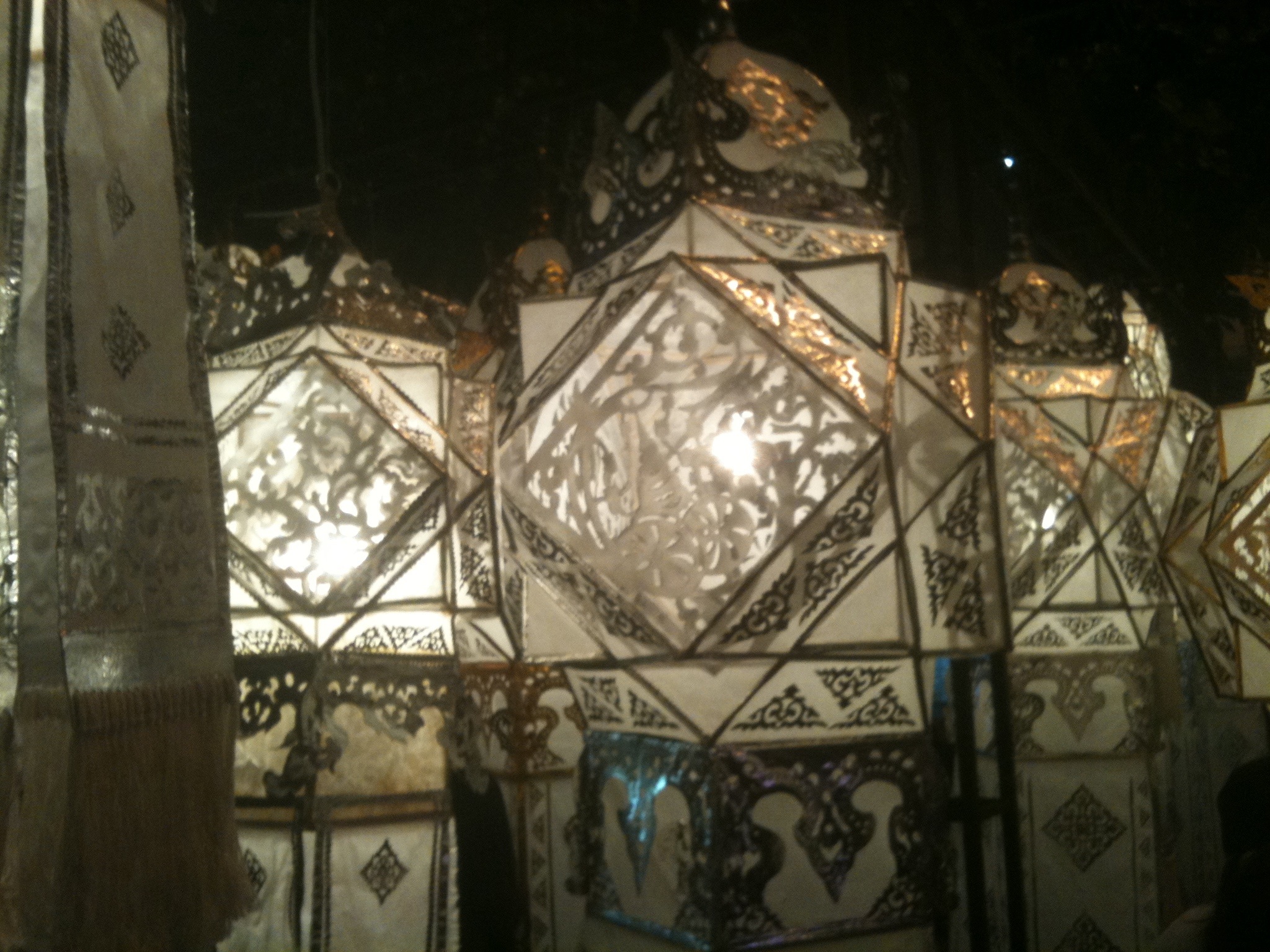
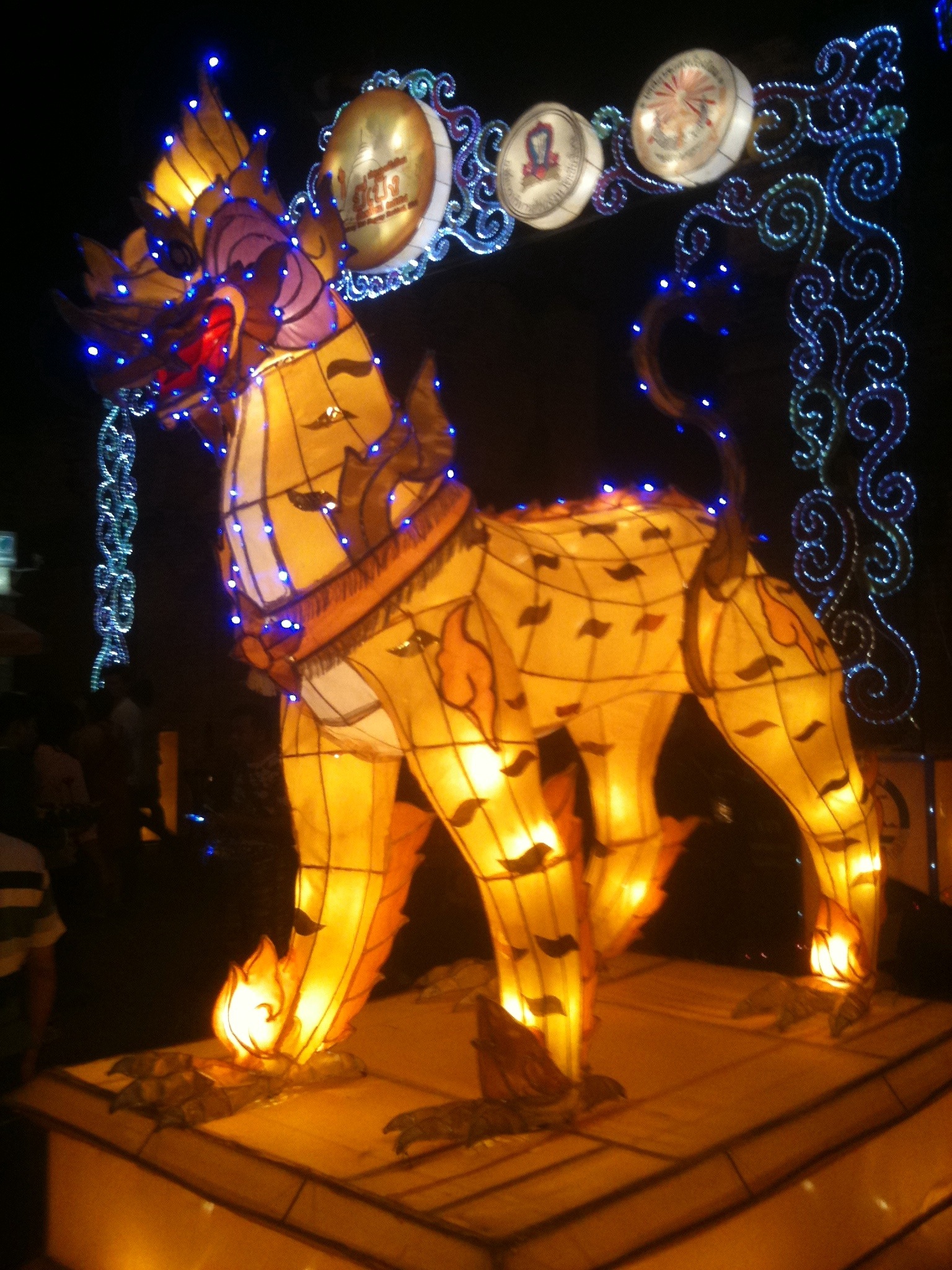
Pictures are attached and should give you an idea of what the night looked like.

20111114-220346.jpg

20111114-221210.jpg

20111114-221143.jpg

20111114-220650.jpg

20111114-220556.jpg

20111114-220748.jpg

20111114-220534.jpg

20111114-215923.jpg

20111114-220049.jpg

20111114-220021.jpg

20111114-215743.jpg

20111114-215808.jpg

20111114-215642.jpg

20111114-215718.jpg

Wat Rong Khun, The White Temple

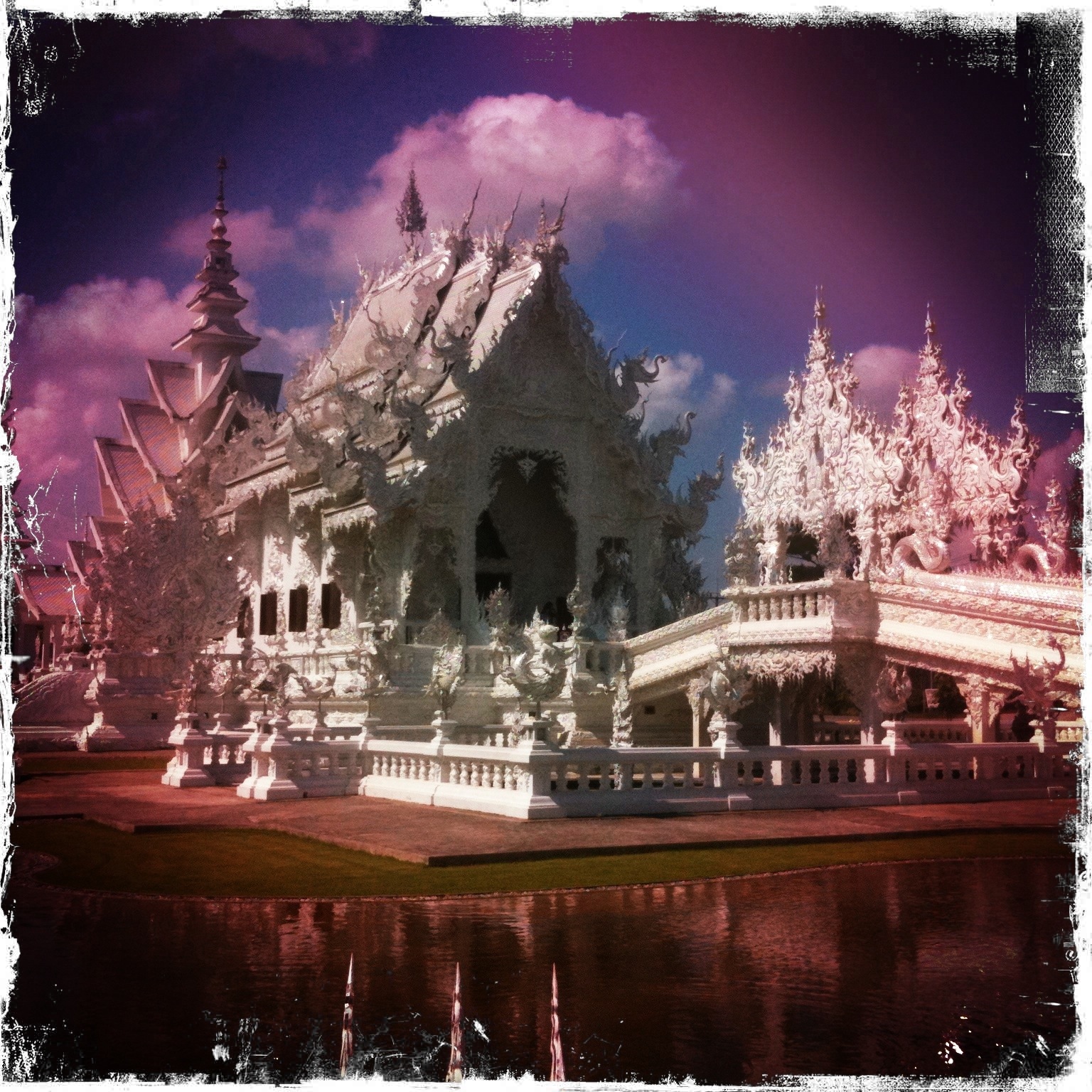
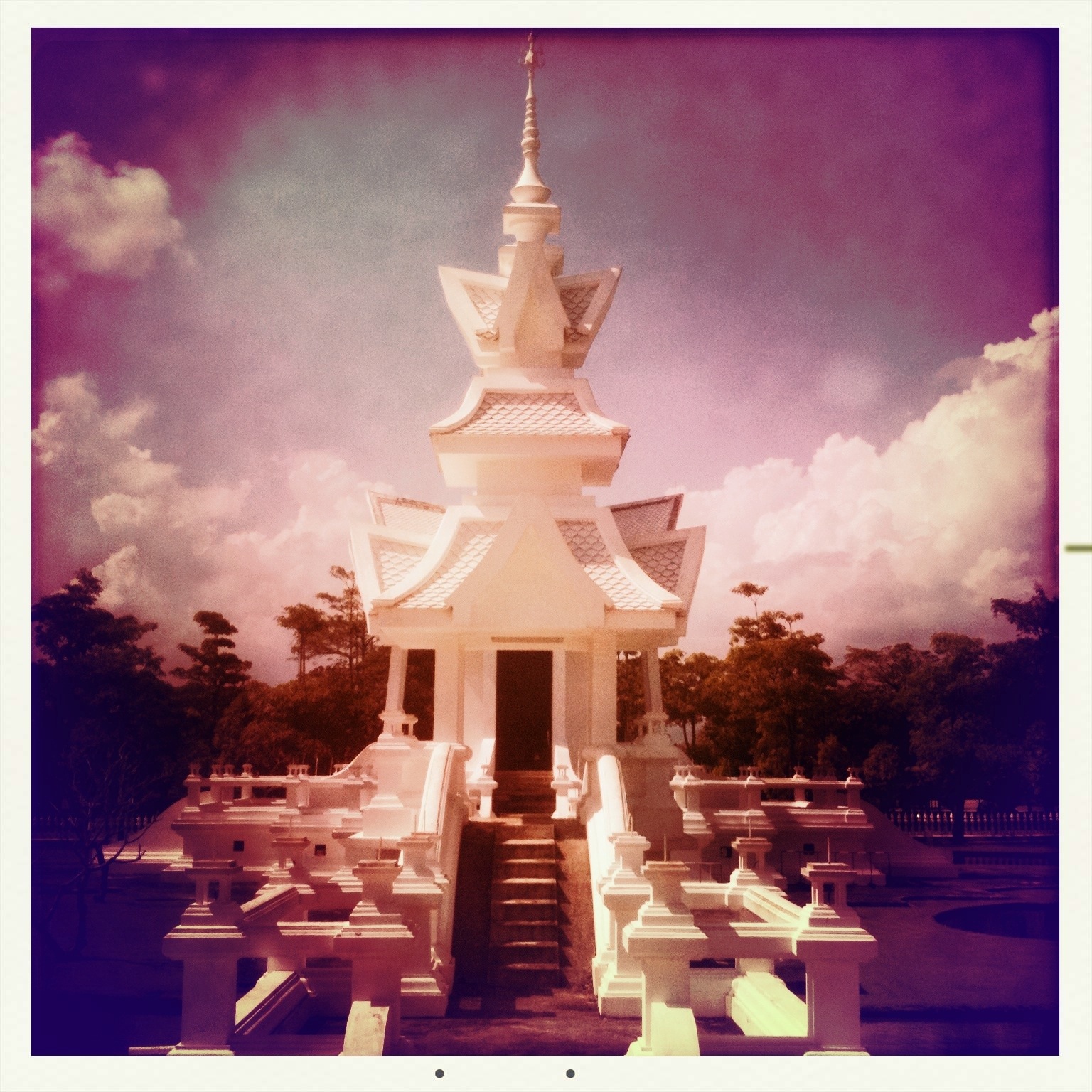
Earlier this week (November 7), I travelled 3 hours north to the city of Chiang Rai. Its the most northern Thai city, approaching the Burma border. I have to be honest, there isn’t much there, but they do have the Wat Rong Khun, better known as the White Temple.

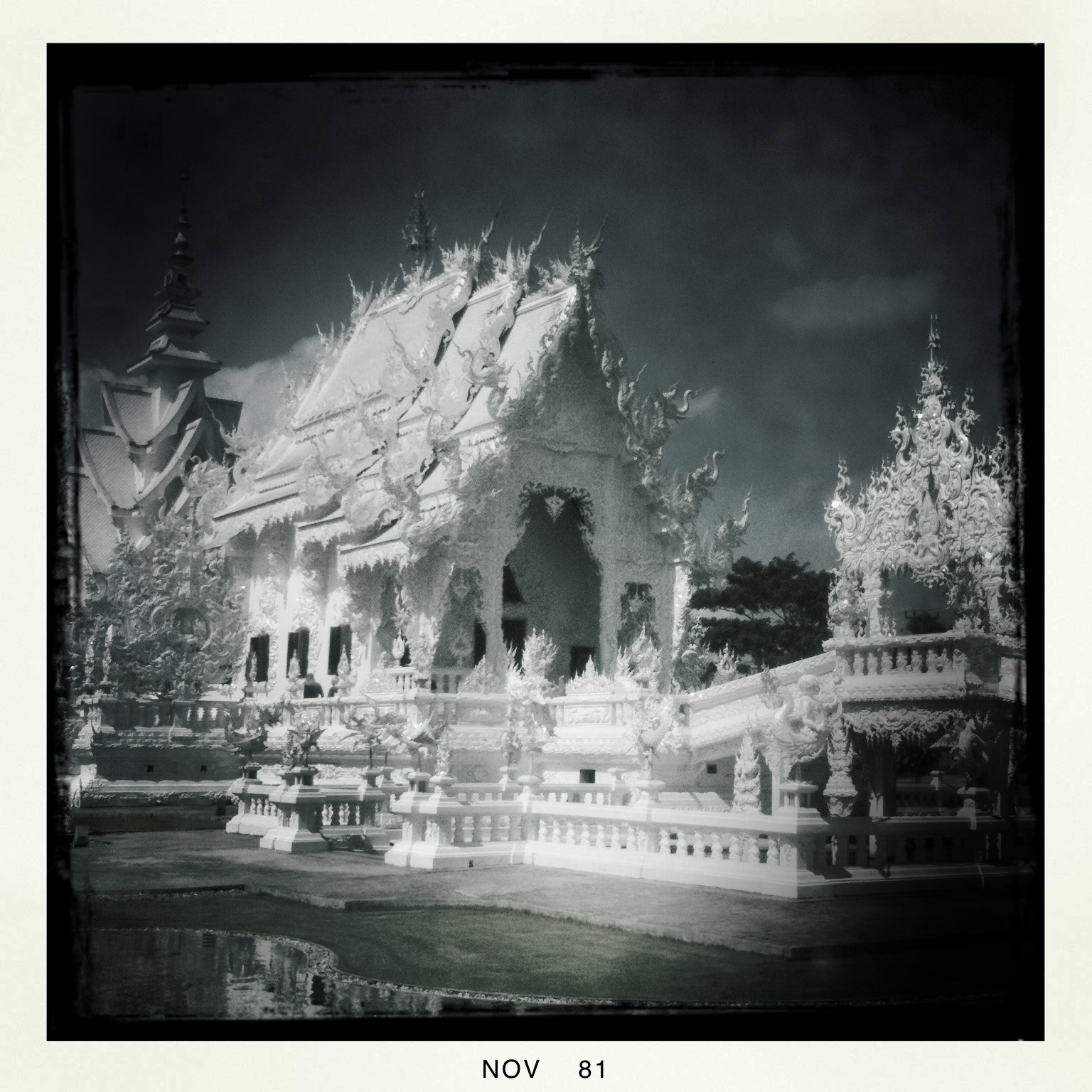
This temple is a recent construction, having been built in 1998. The site is rather large and there seems to be a lot of ongoing construction.

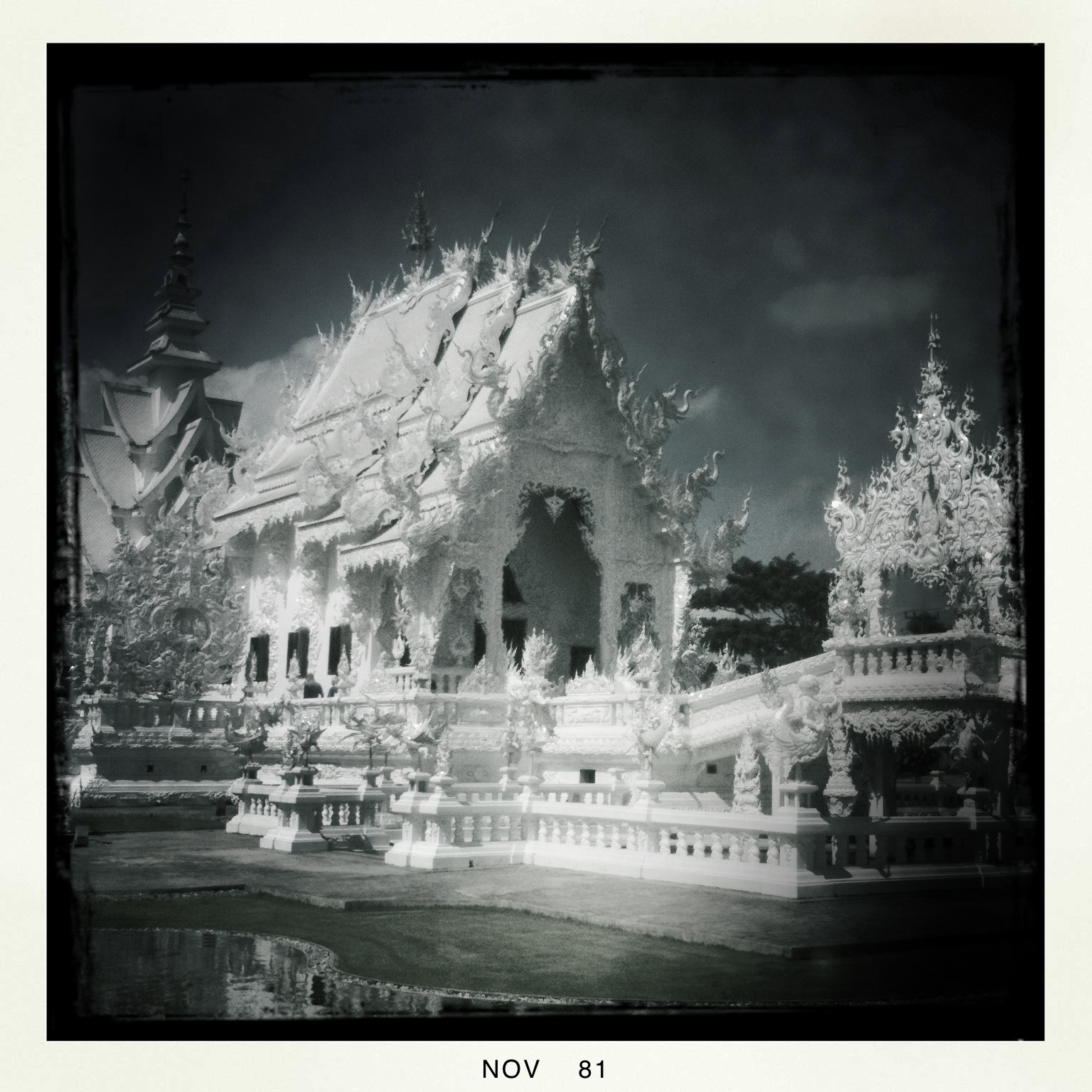
Looking at the WRK from afar, it’s kind of like looking at the pictures of the Taj Mahal – it looks like a fake background. I don’t know why – maybe it’s because the temple is only white and you lose some depth effects. Artists? Why?

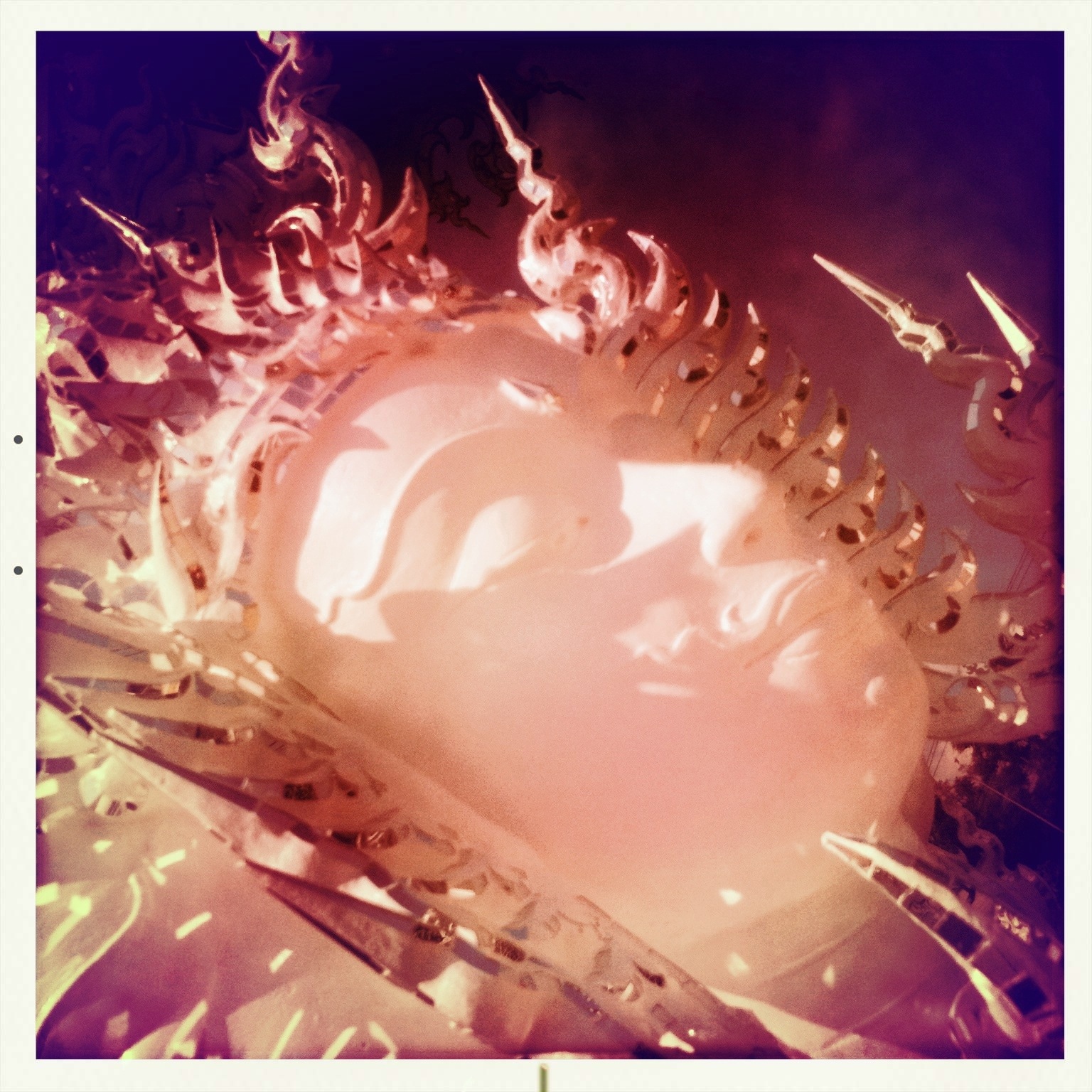
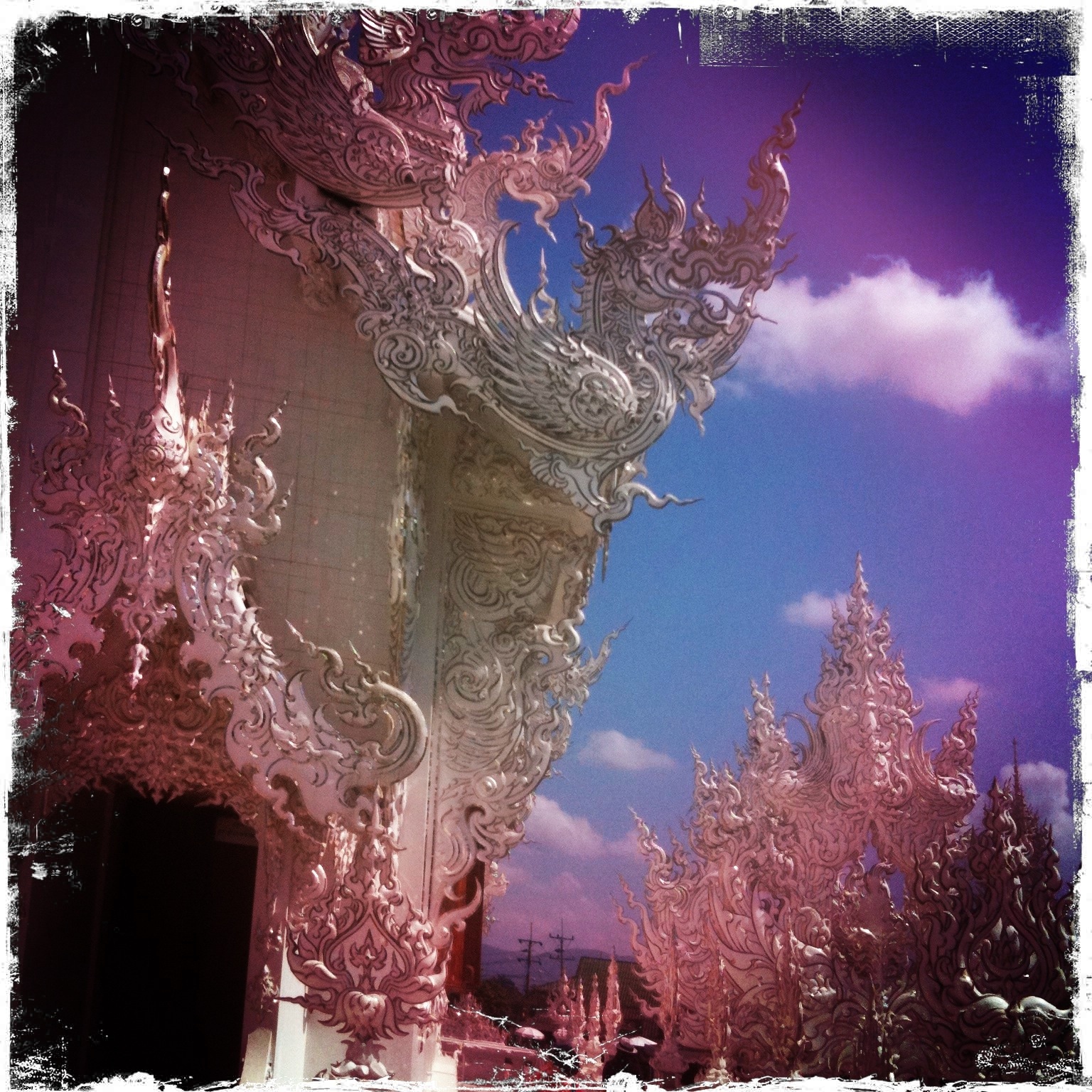
In my reading, I learned that the Wat is made entirely out of white plaster and mirrored tiles. The tiles create various mosaics on the site and adorn many of the statues. It’s very glittery from afar. My simple interpretation is that white represents purity, enlightenment, light, radiance.

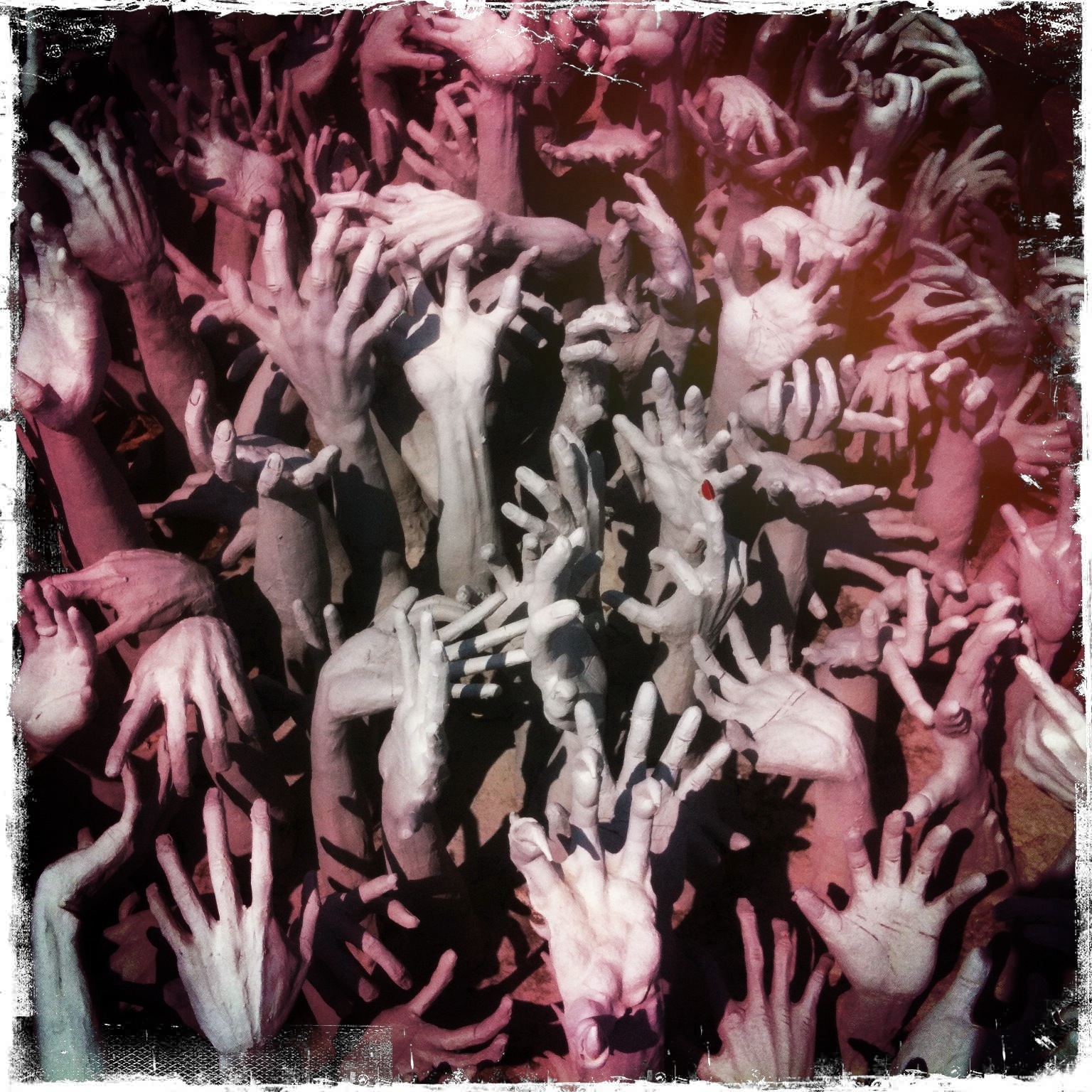
Approaching the temple, the first sculpture is of hundreds of hands reaching upwards from ground level. The sculpture flanks both sides of a walkway that leads to a bridge that gets you to the temple. It’s a pretty modern looking sculpture. The hands look as if they represent people in agony. Could they be reaching up from the depths of hell? I assumed that the hands represent some place of pain and suffering because it’s not part of the actual temple and they are coming upfrom the ground vs. The Buddha, the enlightened one, who is always elevated above man. In my picture, notice the single red fingernail amongst the gray of the hands. The grey hands and red fingernail are the only non-white things of the temple. I don’t have an interpretation for this.

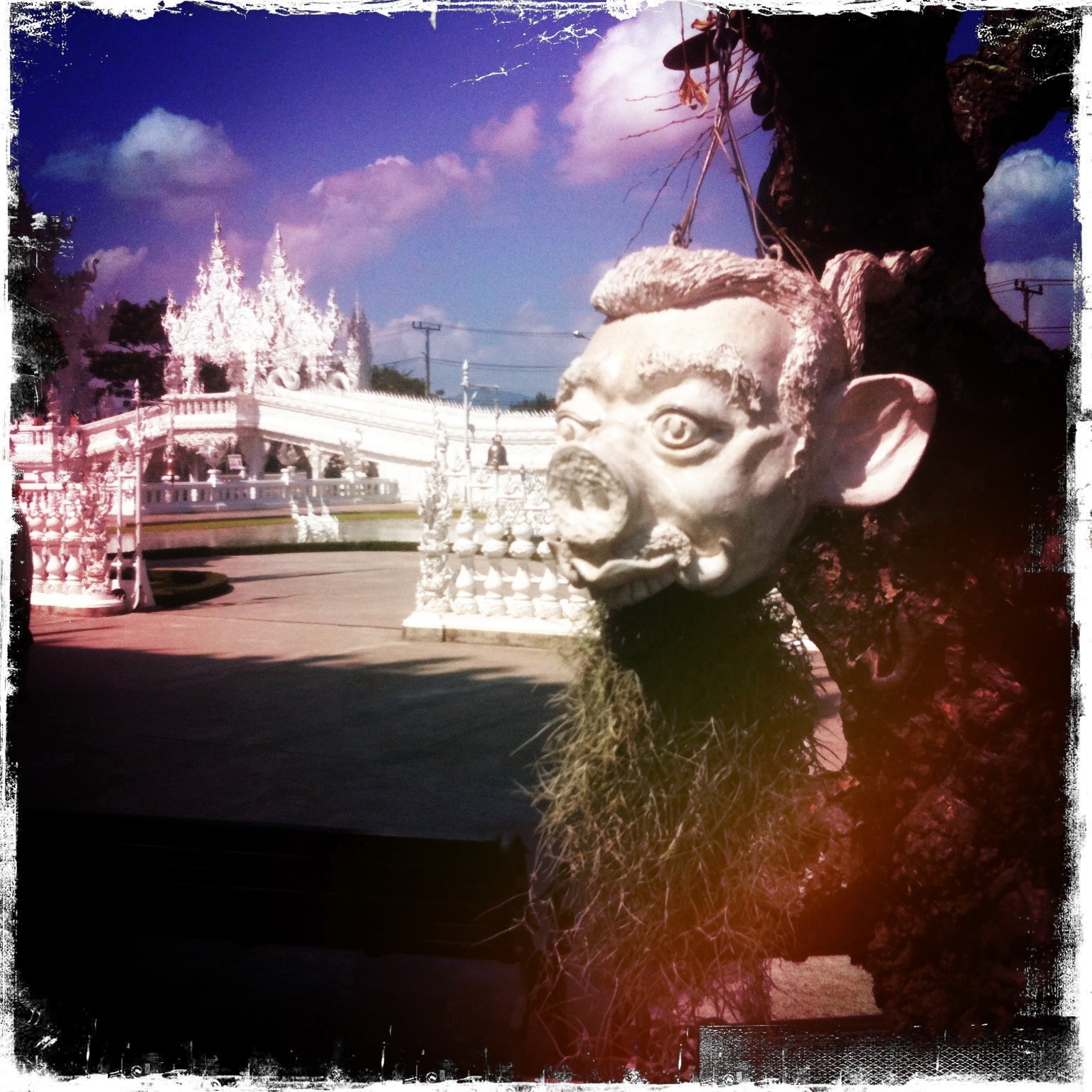
To get to the actual temple, there are some devilish looking men that you pass upon entry to a bridge that leads to it. Between the hands and the devilish figures, I wanted to get to the other side – to that of the peaceful Buddha :).

The whole site is very ornate, thebgrounds are totally landscaped, and one does not have the freedom to wander as at other temples. I was with Sharon from Holland when visiting it and as we were crossing the bridge, she happened to touch 1 mirrored tile. As soon as she did this, a voice in English over some loud speaker asked her to not touch. Weird.

Seeing all of the unfinished business on the temple site, my thought was of ‘La Sagrada Familia’ church in Barcelona. That church was started in 1882 and is still not completed (but will be in 2041) Sure enough, the WT is not expected to be completed until 2070.

It was worth the trip – for the temple and a few simple days of relaxation. The night market was quaint and the food court in the market had some interesting offerings – silk worms, bamboo worms, grasshoppers anyone?

Here are some pics:

20111112-083509.jpg

20111112-083610.jpg

20111112-083748.jpg

20111112-083824.jpg

20111112-083846.jpg

20111112-083904.jpg

20111112-083929.jpg

20111112-083949.jpg

20111112-085020.jpg

The Release of Ten Thousand Lanterns

In Chiang Mai yesterday there were two festivals occurring: Loi Krathong and Yee Peng.

For Loi Krathong, people make these incredibly elaborate krathong, which are origami candle holders made out of banana leaves and decorated with flowers. They are released onto the water which becomes a glittery waterway. It’s a way to pay respect to the river which gives much to the people. It occurs during a full moon period after the monsoon season, typically in November.

Yee Peng, the festival of light is a different festival. With this one, people release lanterns into the sky. The light represents new beginnings and the idea is that when you release the lantern, it takes away all of the bad luck and woes of the past year.

Both festivals occur over 3 nights and tonight is the last night. Every night the river has been totally busy with Thais and tourists releasing their Krathong and lanterns. It is so beautiful. I have attached a link of the release of lanterns. The video is of the huge site in Chiang Mai where 10000 lanterns are released. I was not in this park, but on the river where it was busy, but not like in the video.

At my guest house they gave all of us a lantern for release. It should be more of the same tonight.

Signing off on another beautiful day in Chiang Mai. Xoxo

Beautiful Wat Phra Doi Suthep

This slideshow requires JavaScript.

I had one day in Chiang Mai where I hired a driver to take me to sites out of the city.

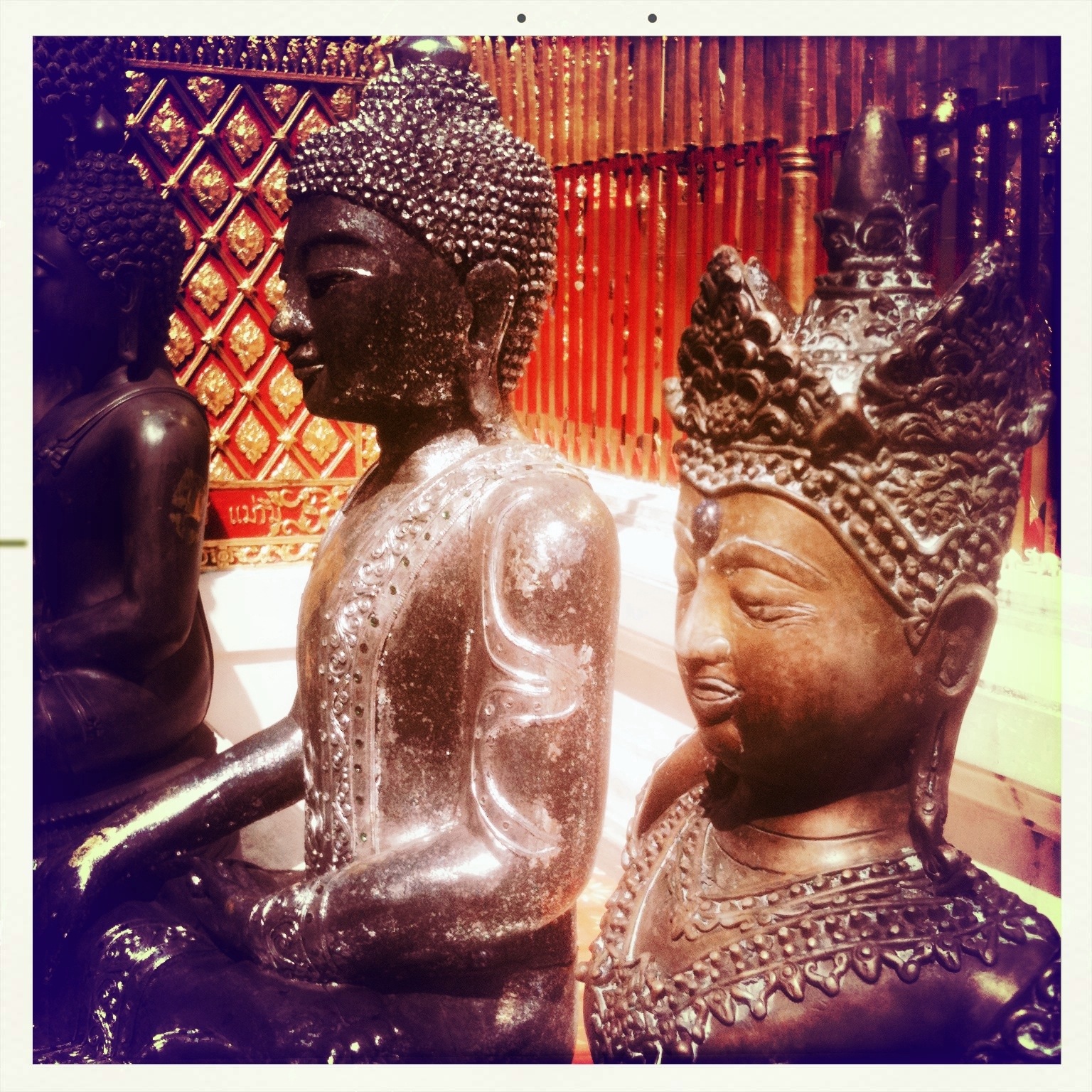
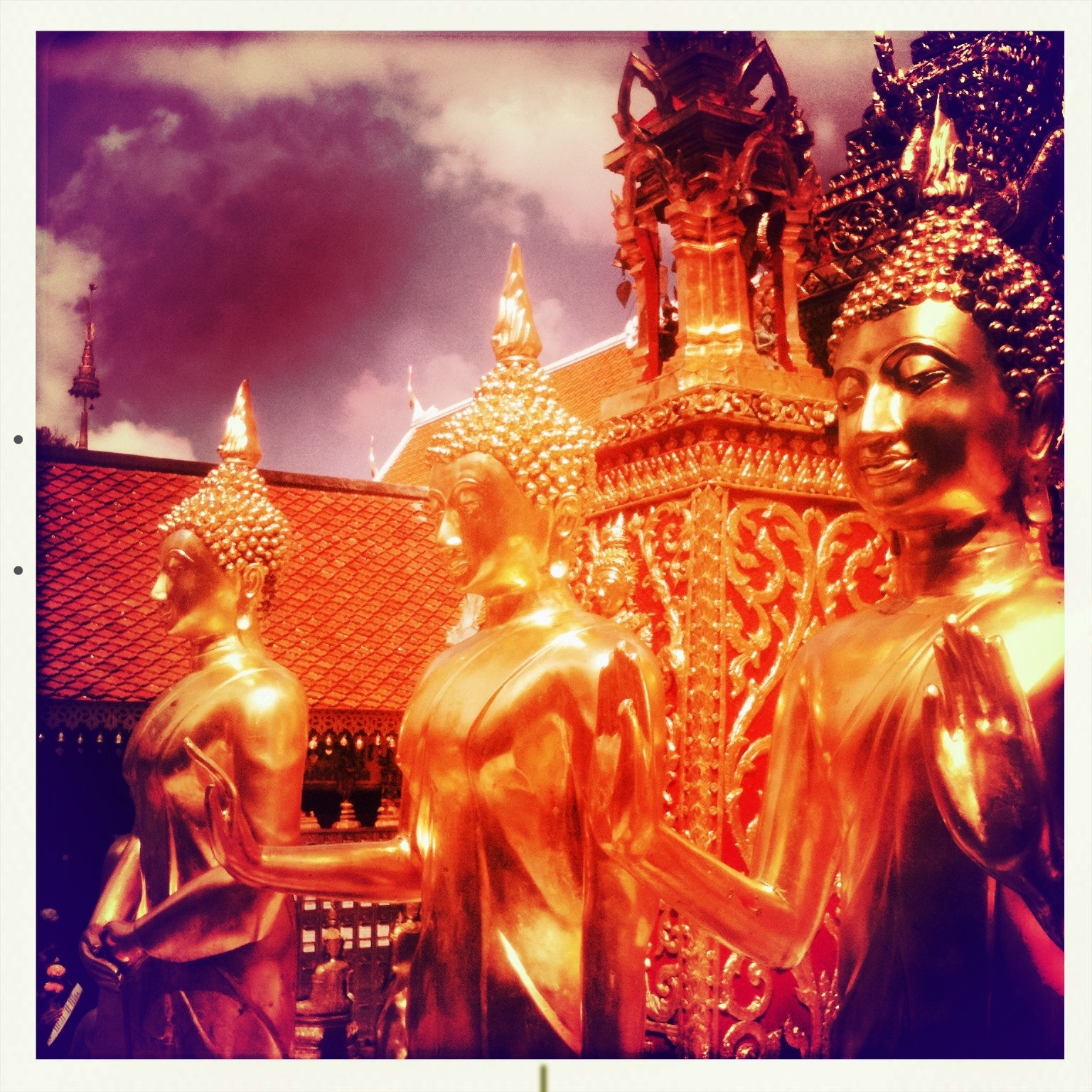
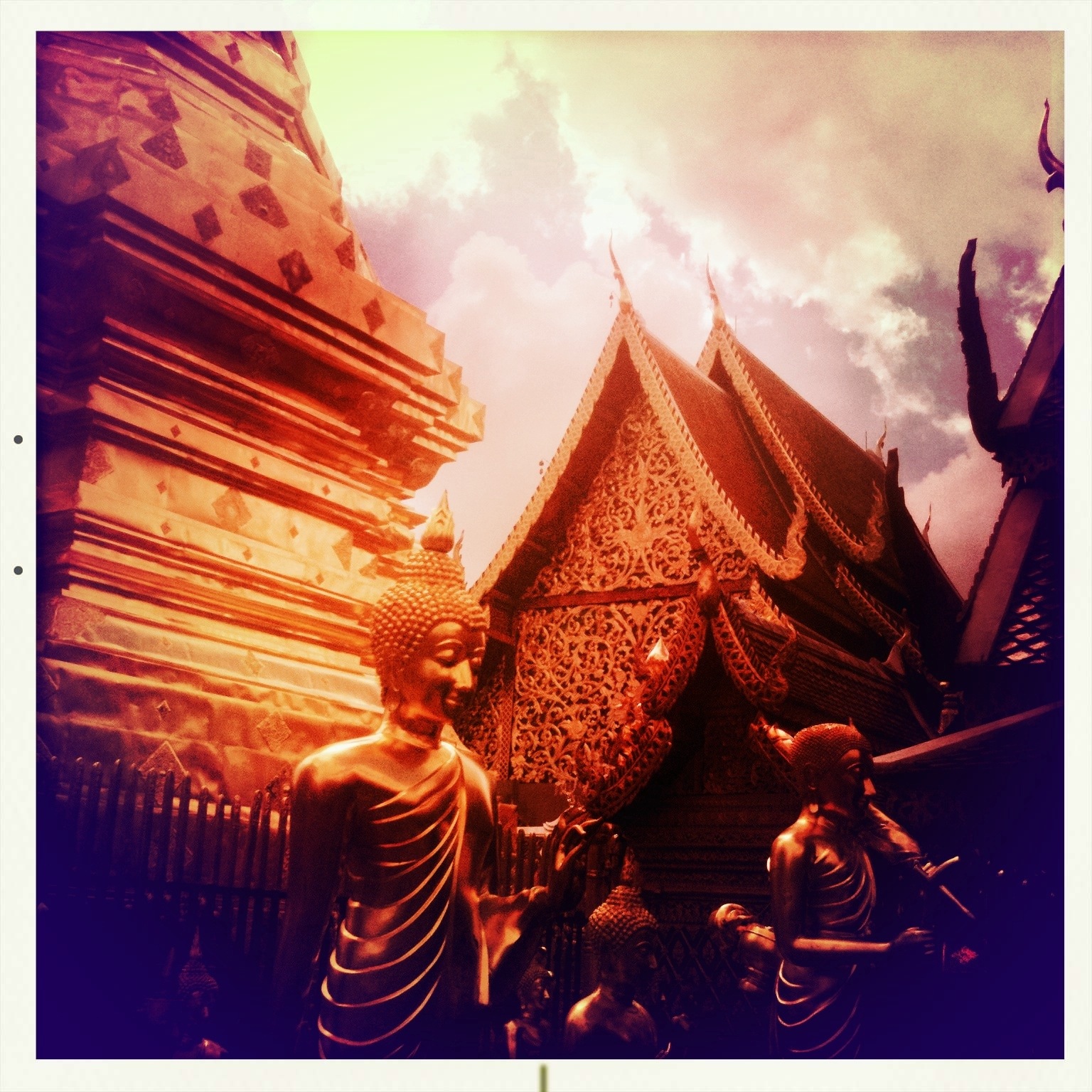
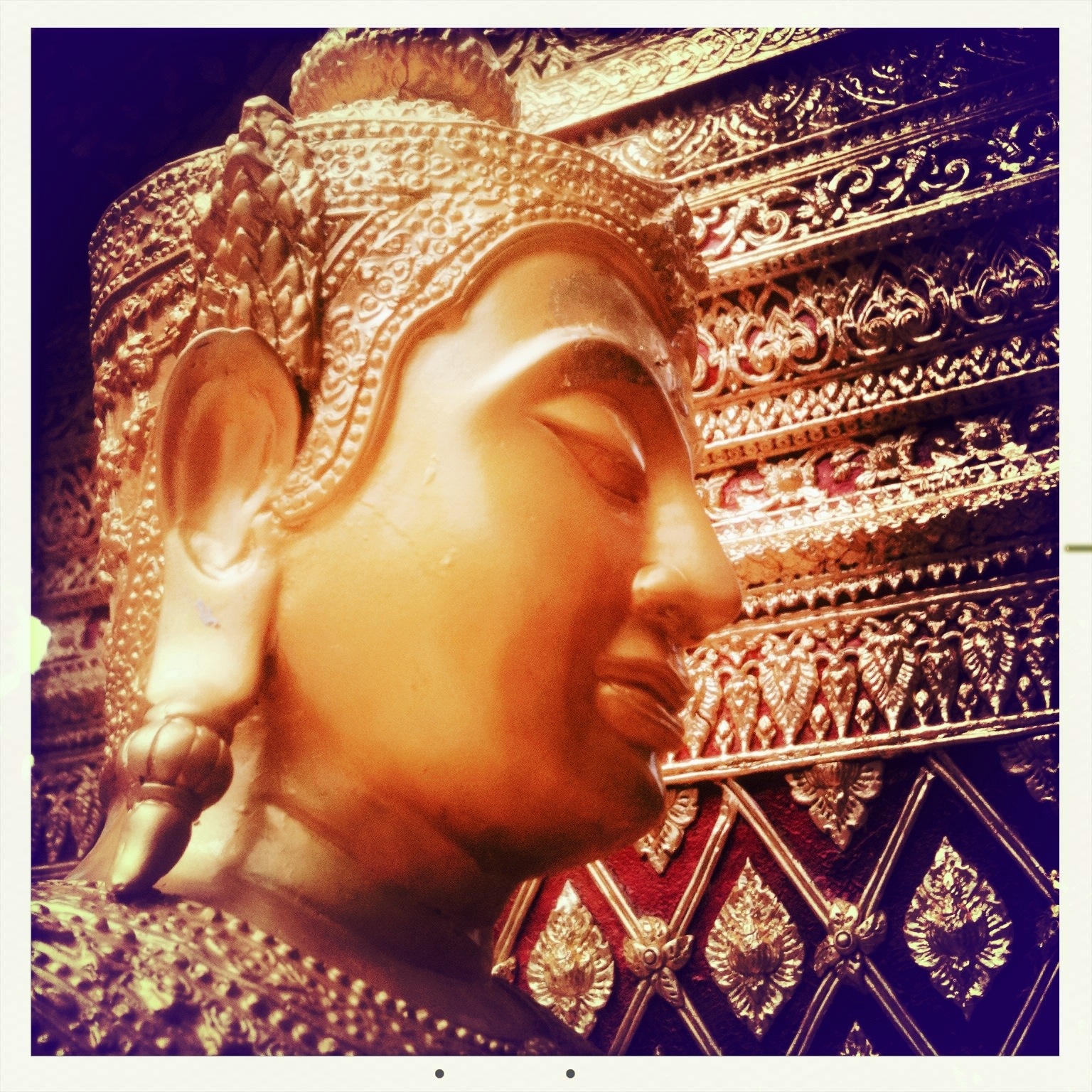
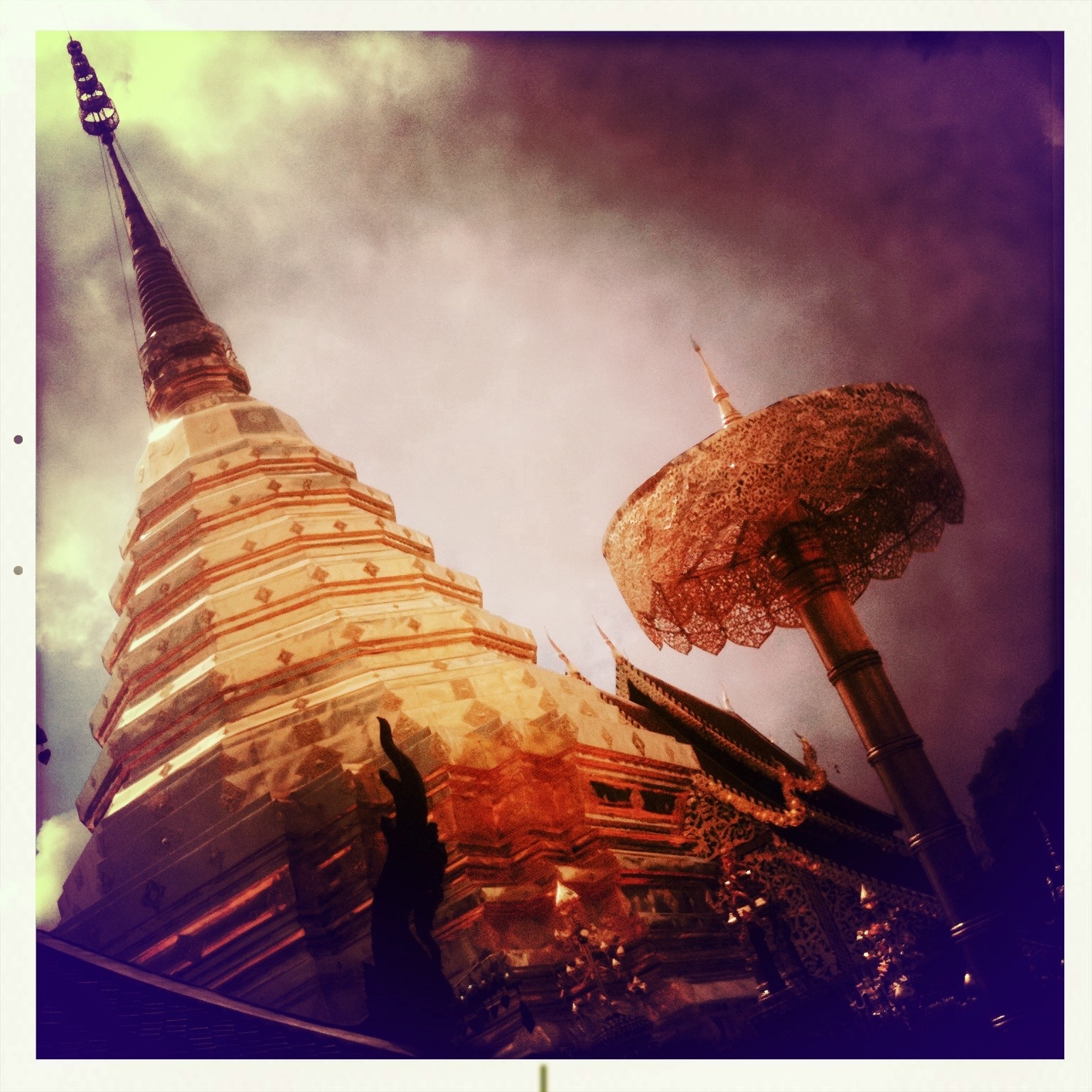
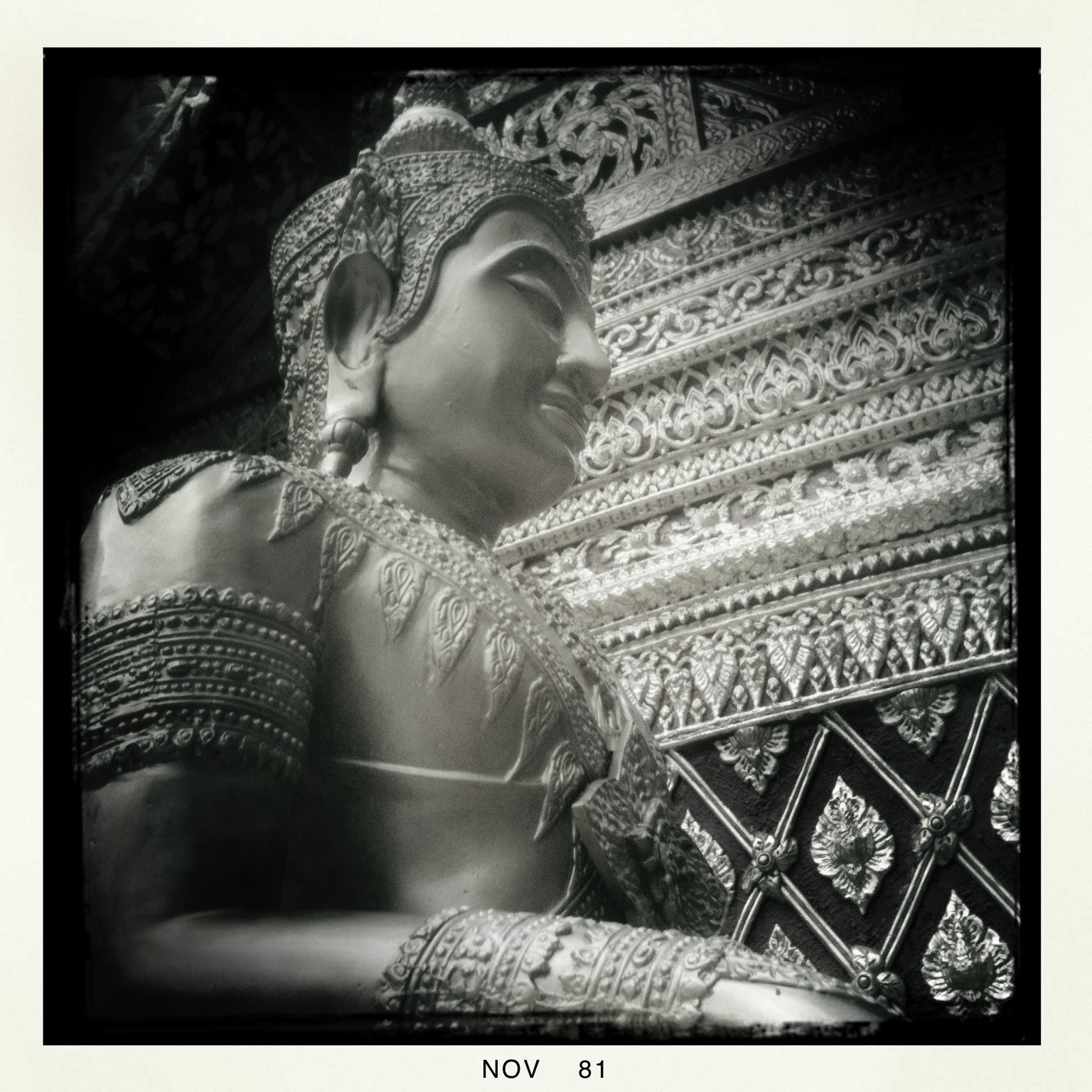
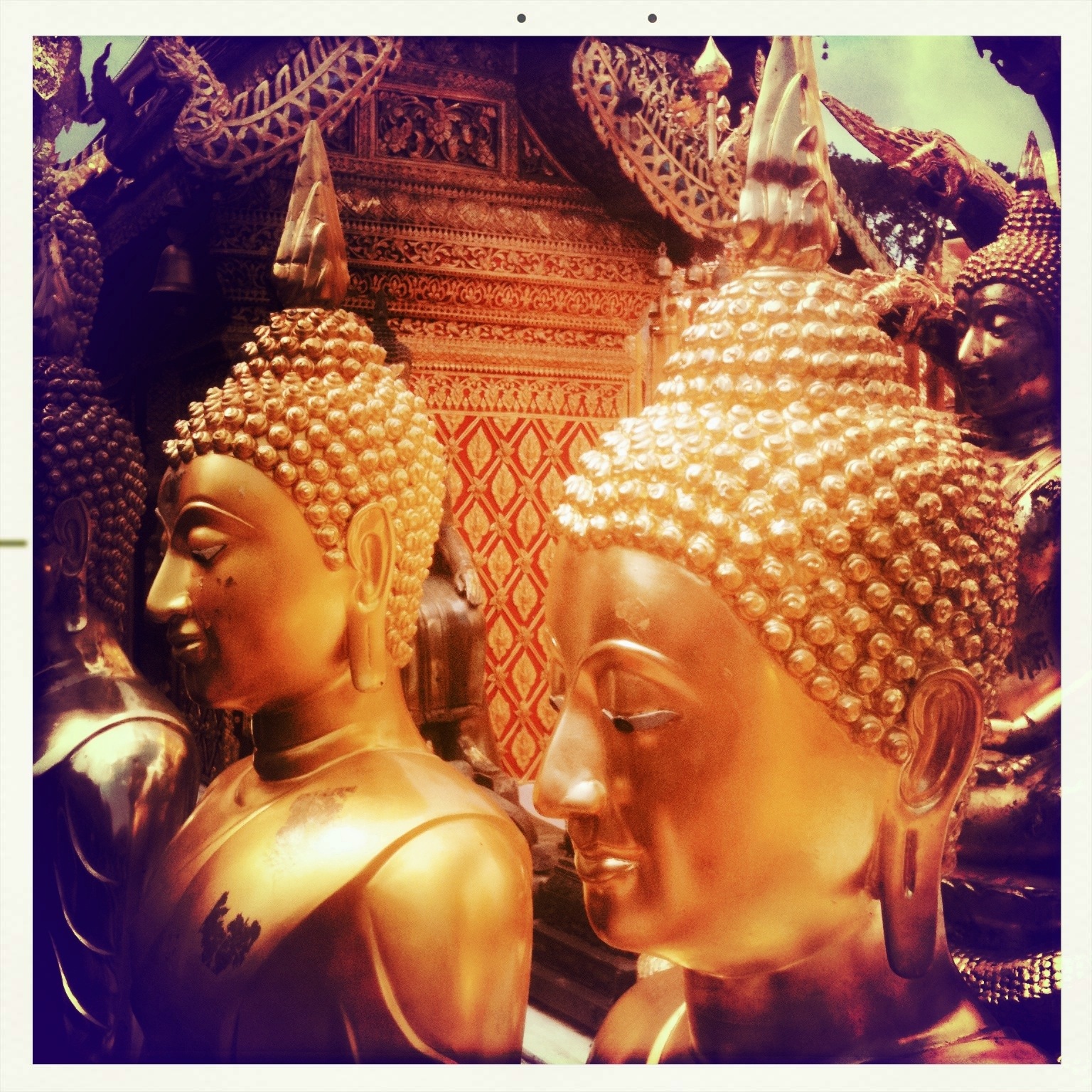
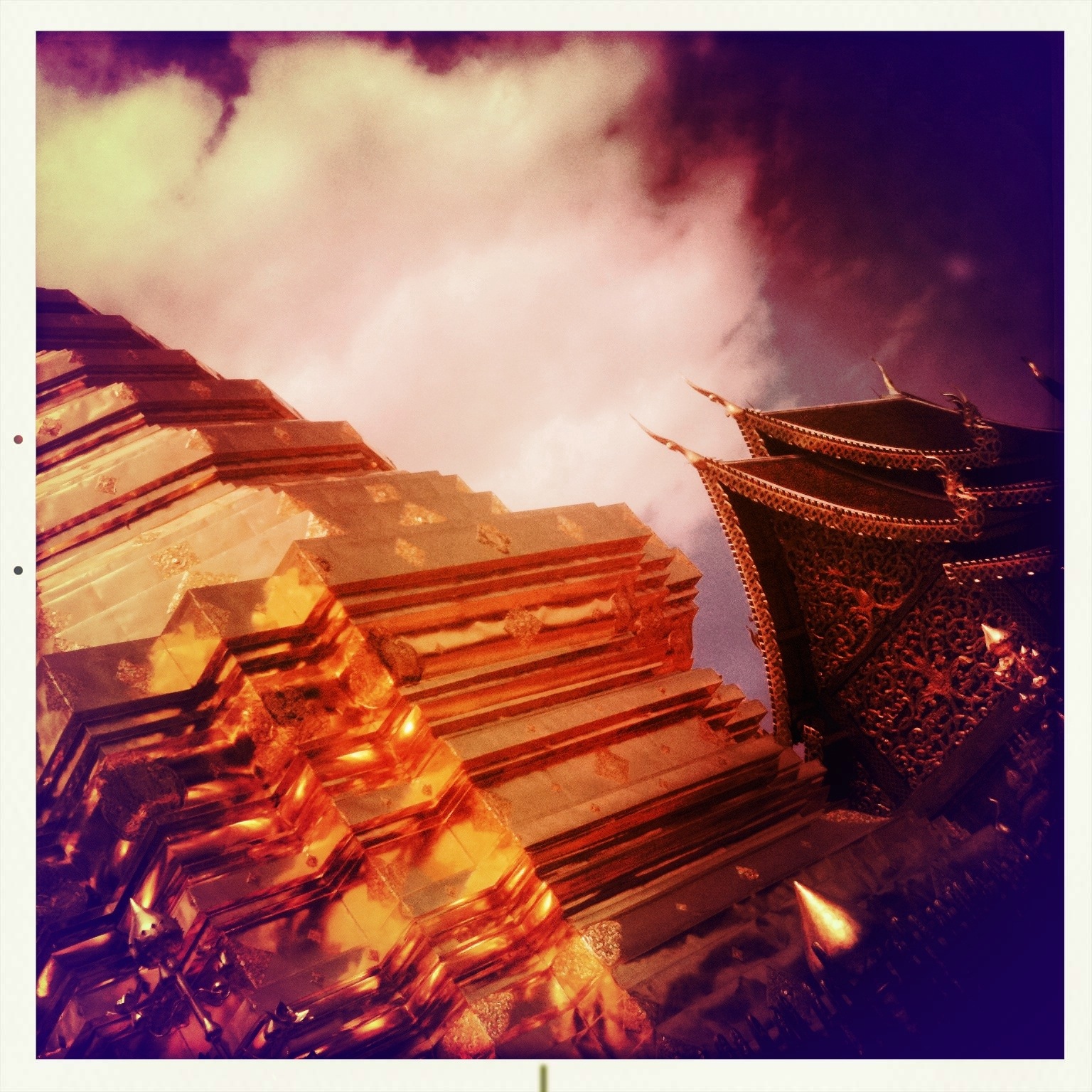
One of our destinations was Wat Suthep, a most sacred temple in the north of Thailand. This temple is incredibly beautiful, in particular, the golden chedi.

The temple is high on a mountain outside of Chiang Mai. Thank goodness that I am not prone to motion sickness as it is a curvy ascent to get there. Once there, a cardiac workout is required of oneself – a steep staircase of 306 steps will eventually get you there. Here are some images and a short video from that day.

20111108-225551.jpg

20111108-225617.jpg

20111108-225641.jpg

20111108-225708.jpg

20111108-225753.jpg

20111108-225828.jpg

20111108-225912.jpg

20111108-225934.jpg

20111108-230010.jpg

20111108-230055.jpg

20111108-230037.jpg

Mastering the Art of being a Pedestrian

I’ve now been here for a week and have yet to master the art of graceful street crossing. I don’t know if any of you have been to Rome, but when I was there many years ago, I took pride in having mastered crossing the street gracefully and without any pauses.

I must say that Rome does not come even close to the craziness of street crossing in Thailand (or at least Chiang Mai). I can’t even begin to describe what it is like.

On my arrival, I consistently found myself standing on the curb watching and waiting….watching and waiting… watching and waiting….to cross the street. Alas, moments came and went. Local folks were crossing the street and I was left on the curb trying to figure out how to cross the God-damned street!

There has been no rhyme nor reason for this skill. As a pedestrian, i have found myself in a state of hyper-alertness – the cars come and go, and don’t seem to pay attention to line markings which leaves me having to be even more alert. I haven’t mentioned this, but formal pedestrian crossings are rare and lights to cross even rarer.

Street crossing is not for the daydreamers, which I tend to be.

After a week, these have been my strategies for crossing the road:
1. Pray for an opening.
2. Wait for a gap and run like hell.
Once you start, there is no
turning back.
3. Stand on the curb and wait until
a local person is going to cross
the same street. Use them as a
shield. Walk along side them
and be on the side that is
furthest from the oncoming cars.
They know what they are doing
and if a car is headed towards
us, the other person will get hit
first. I don’t think that this will
ever happen. These folks know
what they’re doing.

I have met a couple of locals who have encouraged me to just cross the street, that the vehicles will just move around me. I’m not so confident yet. I have tried it and have to say that I have had a couple of smooth and graceful crossings. Perhaps there’s hope for me yet.